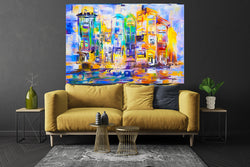


Textured art does more than fill an empty wall. It changes as daylight moves across the room, catches the warmth of a lamp in the evening, and gives color a physical presence. Knowing how to display textured art helps that sculptural quality feel intentional rather than accidental - whether you are hanging one expressive original above a console or creating a quiet moment in a bedroom.
A heavily textured canvas needs a little more consideration than a flat print. Its raised surfaces create shadows, its edges may be part of the composition, and its visual weight can make a modestly sized work feel surprisingly substantial. The goal is not to decorate around it until everything is perfectly matched. The goal is to give the artwork enough room, light, and contrast to be seen fully.
Begin with the wall, not the empty space
Before measuring, stand in the room at the distance from which you will actually see the art. In a living room, that may be from the sofa. In an entry, it may be from several steps back. Notice the wall's color, the nearby furniture, and the direction of natural light. A textured work is an active part of the room, especially when vivid color and sculptural marks are involved.
Choose a wall where the piece can hold visual attention without competing with too many strong patterns. A calm painted wall, warm plaster finish, or simple wood paneling can be beautiful behind texture. A busy wallpaper may work too, but only when there is a clear difference between the artwork and its background. If both the wall and the art are highly detailed, their character can blur together from across the room.
Wall color changes the experience. Deep blue, charcoal, olive, and earthy neutrals can make bright paintings feel luminous. Soft white walls let subtle shadows and layered surfaces become the focus. There is no universal best choice. A dark work on a dark wall can feel intimate and dramatic, while contrast gives the same work a more immediate presence.
Hang textured art at a comfortable viewing height
For a single work, place the center of the artwork roughly 57 to 60 inches from the floor. This familiar gallery guideline works well in many homes because it meets the eye naturally. It is a starting point, not a rule that should override the room.
When hanging art over furniture, relate it to the furniture instead of the floor alone. Leave about 6 to 10 inches between the bottom of the frame or canvas and the top of a sofa, headboard, sideboard, or console. The artwork should feel connected to the piece below it, not as though it is floating far above.
Textured art often appears visually heavier than a smooth piece of the same dimensions. If a canvas has thick, gestural ridges or sculptural additions, hanging it a touch lower can help it feel grounded. Over a tall mantel or a high-backed sofa, however, you may need to adjust upward so the work has enough breathing room. Tape painter's paper to the wall in the artwork's dimensions before committing. From a few feet away, the right placement becomes easier to recognize.
Give the surface room to breathe
A single textured original can be a focal point without an elaborate gallery wall around it. Empty wall space is not unfinished space when it frames something with depth. As a general guide, leave several inches of clear wall around the work, and more when the painting is large, highly dimensional, or rich with color.
This matters above a console or mantel as well. If the artwork is about two-thirds to three-quarters the width of the furniture beneath it, the arrangement usually feels balanced. A narrower piece can still look striking, particularly if it is paired with a lamp, vessel, or branch arrangement that creates an intentional visual grouping. Avoid placing too many small objects directly below a deeply textured canvas. The eye needs a quiet place to rest.
If you are grouping several works, let the texture lead the arrangement. Pieces with similar tonal palettes can live close together even if their subjects differ. For mixed media, canvas, and framed paper works, create a consistent outer rhythm with spacing rather than forcing every frame to match. About 2 to 3 inches between works is often enough to make them read as one considered composition.
Light is part of how to display textured art
Texture is revealed by light, but harsh light can overwhelm it. The most flattering illumination usually comes from an angle, allowing the raised paint and layered surface to cast soft shadows. A picture light, adjustable ceiling fixture, or nearby lamp can create this effect beautifully.
Avoid placing original art where intense direct sun strikes it for long periods. Sunlight can be lovely for viewing a work in the moment, yet repeated exposure may affect color and materials over time. If a bright wall is the only place the painting belongs, consider sheer window treatments, UV-filtering solutions, or a location that receives indirect light instead.
At night, choose warm bulbs in the 2700K to 3000K range for most residential spaces. They tend to flatter earthy tones, luminous blues, botanical greens, and layered neutrals without making the room feel clinical. Aim the light so it washes over the work rather than shining straight into its center. A small adjustment can bring forward details that were nearly invisible in flat overhead lighting.
Be mindful of glare when the artwork includes varnished areas, metallic pigments, or a glossy finish. Move the light source slightly to one side or raise it until reflections disappear from your usual seating position. Good art lighting should feel natural. You should notice the painting, not the fixture working so hard to illuminate it.
Frame and mount with the artwork's depth in mind
Many textured canvases are designed to be displayed without a traditional frame. Painted edges and a deep gallery-wrapped profile can make the work feel complete from every angle. In this case, a clean wall and thoughtful lighting are often all that is needed.
A floating frame can be a beautiful choice when you want a more finished architectural edge. The narrow reveal between the canvas and the frame preserves the sense of dimension rather than pressing the surface into a tight border. Choose a frame that supports the artwork's mood: natural oak for warmth, black for definition, or a quiet metallic finish for a more contemporary setting.
Do not use a frame that touches or compresses the raised surface. Deep texture needs clearance. For paper prints or photographs, glazing is often appropriate, but make sure the work is professionally matted and framed so it does not sit directly against the glass. Each format has different needs, and the display should protect the work as gracefully as it presents it.
Mounting deserves the same care. Use hardware rated for the artwork's actual weight, especially with sculptural canvas pieces that may weigh more than they appear to. Whenever possible, secure hardware into a stud or use quality anchors suited to your wall type. A level and two hanging points will keep larger works from shifting over time.
Let the room echo, not imitate, the art
The most inviting interiors do not copy every color from a painting into pillows, rugs, and accessories. Instead, choose one or two notes from the work and allow them to reappear quietly. A terracotta mark in the painting might be echoed by a ceramic bowl. A field of mossy green might find company in a plant, linen throw, or upholstered chair.
Texture can be echoed in the room as well. A sculptural painting often feels especially at home near natural wood, woven fibers, stone, linen, or matte ceramics. These materials create a conversation without asking the artwork to carry the entire room. If the painting is highly tactile and energetic, pair it with simpler furnishings. If the work is more subtle, a richly textured rug or wood grain can help extend its presence.
In an office, lobby, or dining space, give the artwork a clear sightline from the doorway or main seating area. In a bedroom, consider the slower, more intimate view from the bed. The right placement is not always the largest available wall. It is often the place where the work can offer a pause - a moment of color, nature, and handmade presence in the rhythm of everyday life.