

Table of Contents
- Why Fine Art Prints Are the Cornerstone of Modern Decor
- Curated Picks: The Best Fine Art Prints for Every Modern Space
- Giclée vs Original Art: Which One Fits Your Home?
- How to Style Fine Art Prints Like a Professional
- Investing in Fine Art Prints: What Matters Most
- Common Mistakes to Avoid When Buying Prints Online
- Your Next Step Toward a Curated Collection
- Frequently Asked Questions
Last Updated: September 6, 2026
Why Fine Art Prints Are the Cornerstone of Modern Decor
The right wall art anchors a room’s entire mood. Fine art prints have become the defining element of contemporary interiors because they deliver the visual weight of an original painting without the collector-level price tag.
At Just Art by John, we curate original artworks alongside museum-quality Giclée prints. The shift toward modern living spaces with clean lines and neutral palettes creates a demand for artwork that provides a focal point without clashing.
Below, we’ll walk through the best fine art prints for modern living, covering specific styles, the technical differences between print types, and the professional styling rules that ensure your walls look deliberate rather than decorated by default.
Curated Picks: The Best Fine Art Prints for Every Modern Space
Choosing the right print starts with understanding the mood you want to create. While original paintings offer unique texture and presence, fine art prints provide an accessible entry point to own visually compelling work from established artists.
Abstract and Contemporary Statements
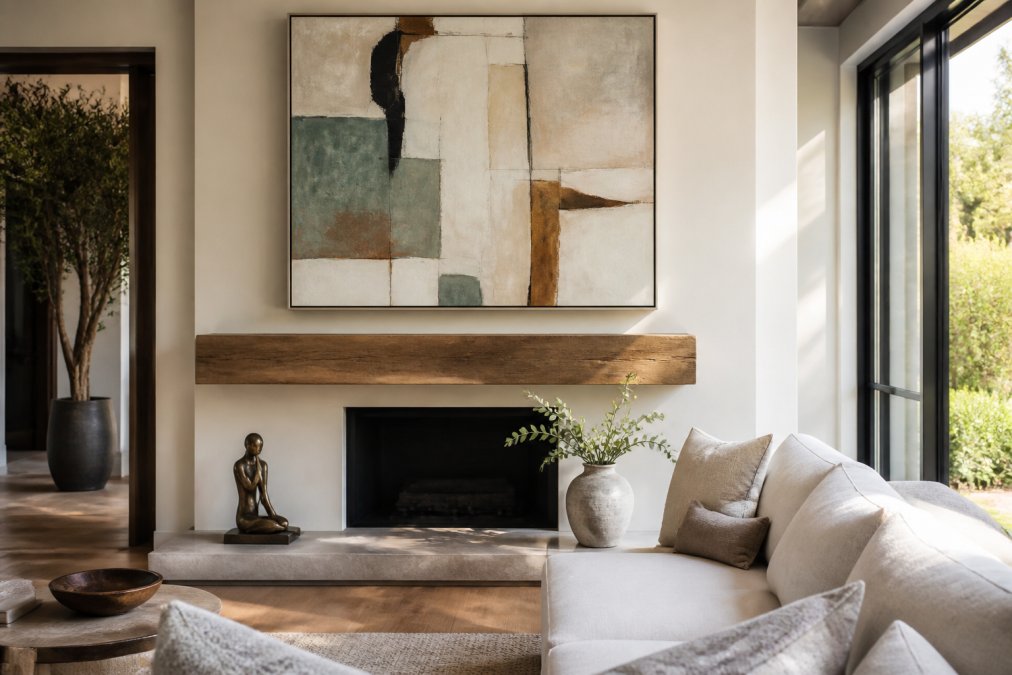
Abstract prints are the workhorses of modern decor. They introduce movement, color blocking, and visual interest that pairs well with minimalist furniture. Look for pieces that pull a secondary color from your rug or cushions to create a cohesive flow.
Botanical, Landscape, and Nature-Inspired Works
For spaces that need calm, nature-inspired art delivers. Botanical prints and landscape photography bring an organic softness that balances the hard lines of modern architecture. Orchid studies offer a sophisticated middle ground between realistic representation and artistic abstraction.
Minimalist and Curated Gallery Walls
A gallery wall is the ultimate expression of personal curation. The key is restraint: select a cohesive theme, whether that is a consistent color palette, a shared medium like line drawings, or a mix of small and medium frames with uniform spacing.
Giclée vs Original Art: Which One Fits Your Home?
The choice between a Giclée print and an original painting is often framed as a simple budget question, but for the modern collector, it's also a decision about sustainability, material quality, and how the piece will live in your space.
The Technical Case for Giclée
A true Giclée print is not a standard inkjet output. It is produced on professional-grade printers using pigment-based inks that are suspended in a binder and sprayed onto the substrate. Unlike dye-based inks, which sit on the surface and fade relatively quickly, pigment inks embed into the paper fibers, making them highly resistant to UV light and environmental pollutants.
The substrate matters as much as the ink. Museum-quality Giclée prints are made on 100% cotton rag paper or archival canvas. Cotton rag paper is acid-free and lignin-free, which prevents the yellowing and embrittlement that plagues wood-pulp papers. Archival canvas is typically a poly-cotton blend coated with a receptive layer that holds the ink without cracking or peeling.
The Sustainability Angle Most Guides Miss
The fine art industry has a significant environmental footprint, from the harvesting of trees for paper to the chemical runoff from traditional printing processes.
Sustainable Giclée Printing: Many modern printmakers are moving toward FSC-certified papers, which guarantee the wood fiber comes from responsibly managed forests. Some studios also use water-based pigment inks that contain fewer volatile organic compounds (VOCs) than solvent-based alternatives. When you buy a Giclée print, you are essentially commissioning a single, on-demand production run, eliminating the waste of mass-produced posters.
The Original's Footprint: An original painting, particularly one created with oil or acrylic, has a different environmental story. The production of artist-grade paints involves the mining of pigments and the use of petrochemical binders. However, an original is a single, durable object that is unlikely to be discarded.
Making the Choice for Your Space
For a high-traffic living area where you want a bold, large-scale statement without the risk of sun damage to a one-of-a-kind piece, a Giclée print on archival paper is the pragmatic and often more sustainable choice.
An original, by contrast, offers a tactile presence and a unique energy that no reproduction can capture. If you are drawn to an original, avoid hanging it in direct sunlight and be prepared to invest in professional cleaning and maintenance. The choice is not about which is "better" but about which aligns with your living situation, budget, and environmental commitment.
How to Style Fine Art Prints Like a Professional
Styling art is about creating visual balance between the artwork, the wall, and the furniture beneath it. A common mistake is choosing pieces that are too small for the wall.
Scale, Proportion, and Placement
A good rule of thumb is that the width of your artwork should be roughly two-thirds to three-quarters the width of the furniture it hangs above. For a standard 84-inch sofa, you would want a single piece or a gallery arrangement spanning about 60 inches. When hanging, the center of the art should sit at approximately eye level, which is typically 57 to 60 inches from the floor.
Framing and Color Palette Coordination
Framing is an extension of the artwork itself. For modern spaces, thin black, white, or natural wood frames keep the focus on the print. The frame should also work with your room’s color palette, if you have brass fixtures, a thin brass frame can tie the room together subtly.
Investing in Fine Art Prints: What Matters Most
When you buy a print online, you are investing in its longevity. The difference between a piece that fades in five years and one that looks pristine for decades comes down to the materials, the artist’s standards, and, critically, how you care for it once it's on your wall.
Archival Quality and Print Longevity
The term "archival" refers to materials designed to last. Look for prints described as Giclée, which use pigment-based inks that are highly resistant to fading. The paper or canvas should be acid-free and archival-grade. Many retailers, including the Fine Art Trade Guild, set standards for what constitutes a museum-quality print, focusing on the stability of the inks and substrates used. But even the most archival print will degrade prematurely if it is not protected from the specific environmental hazards of a contemporary home.
The Hidden Threat: UV Light and Your Walls
The single greatest enemy of any fine art print is ultraviolet (UV) light. Modern living spaces often feature large windows, skylights, and open floor plans that flood the room with natural light. UV rays break down the molecular structure of pigments, causing them to fade and shift in hue.
The 500-Lux Rule: Museums typically limit light exposure to around 50 to 150 lux to protect sensitive works (nps.gov). A typical, brightly lit living room can reach 500 lux or more. Avoid hanging your most valuable prints on a wall that receives direct, intense sunlight for more than a few hours a day. If you must, use UV-filtering glass or acrylic, which blocks up to 99% of UV radiation. Standard picture frame glass offers almost no UV protection.
Managing Humidity in Open-Concept Homes
Modern open-concept living often means the kitchen, dining, and living areas share one climate zone. Cooking steam and temperature fluctuations can cause significant humidity swings. High humidity causes paper to expand and buckle, while low humidity makes it brittle and prone to cracking. The ideal relative humidity for displaying fine art is between 40% and 55%.
In a modern home, you can manage this by:
- Avoiding placement near heat sources: Keep prints away from radiators, HVAC vents, and fireplaces. The dry, hot air will accelerate the embrittlement of the paper.
- Using a dehumidifier in humid months: If you live in a climate with high summer humidity, a dehumidifier in the main living area will protect your art and your furniture.
- Ensuring proper ventilation: When cooking, use your range hood to exhaust steam. This prevents moisture-laden air from settling on your walls and being absorbed by the print.
The Dust and Pollutant Factor
Open-concept spaces also mean more airborne dust and pollutants from cooking and general living. Dust particles are abrasive and can settle into the pores of the paper, causing micro-scratches over time. Regularly dust the frame and glazing with a soft, dry microfiber cloth. Never spray cleaning solution directly onto the glass; spray the cloth lightly instead. For canvas prints without glazing, use a soft brush attachment on a vacuum cleaner on a low setting.
A Preservation Checklist for the Modern Home
To ensure your fine art print investment retains its beauty and value, adopt these practices:
- Hang away from direct sunlight and use UV-filtering glazing for pieces in bright rooms.
- Maintain a stable indoor climate between 40% and 55% relative humidity.
- Use acid-free mounting materials when framing. The mat and backing board should be archival-grade to prevent acid burn from the frame itself.
- Dust your framed art monthly with a dry, soft cloth.
- Inspect the back of the frame annually for signs of moisture or insect activity.
Common Mistakes to Avoid When Buying Prints Online
Buying art online comes with inherent risks, primarily around color accuracy and scale. The most frequent complaint we hear is that the piece looks different in person than it did on screen.
To mitigate this, always check the exact dimensions of the print and measure your wall space before purchasing. Visualizing the size with painter's tape on the wall can prevent costly mistakes. Another common error is ignoring the return policy. A reputable gallery will stand behind its work. Many buyers also overlook the difference between a poster and a true fine art print. Posters are mass-produced on thin paper and fade quickly, whereas a Giclée print on archival paper is a durable investment. For those concerned about color fidelity, look for galleries that offer a preview or a clear return policy. As noted in the Federal Trade Commission's guidance on online shopping, understanding a seller's return and refund policies before you purchase is essential consumer protection.
Your Next Step Toward a Curated Collection
Building a collection is a personal journey that should reflect your taste and lifestyle. Whether you are drawn to the bold statement of an abstract canvas or the quiet elegance of a botanical study, the best fine art prints for modern living are the ones that resonate with you daily.
At Just Art by John, we offer a curated selection of original paintings, fine art Giclée prints, and sculptures, all personally created by John Cranshaw. Our diverse collection spans from striking photography to unique orchid prints, ensuring a perfect addition for every discerning art lover. Start your collection with a piece that speaks to you, and let your walls tell your story.
Frequently Asked Questions
What is the difference between a giclée print and a standard art print?
A giclée print uses archival pigment-based inks and high-resolution inkjet printers on fine art paper or canvas, producing rich color and detail that lasts for generations. A standard art print, often a lithograph or poster, uses dye-based inks that can fade more quickly. For modern living spaces where art is a focal point, the depth and longevity of a giclée print justifies the higher cost, especially if you are investing in fine art prints.
How do I choose the right size art print for my living room wall?
Use the 70/30 rule as a starting point: your art should cover roughly 70 percent of the available wall space. Measure your wall or the area above your sofa, then multiply the width by 0.7 to find the ideal art width. This creates visual balance and prevents the piece from feeling lost. For tall walls, consider a vertical orientation or a multi-panel arrangement to fill the space properly.
Are giclée prints considered fine art?
Yes. A giclée print is considered fine art when it is produced to archival standards and often when it is part of a limited edition. Museums and galleries collect giclée prints because the printing process captures the texture and color of the original work with exceptional fidelity. When created by an artist like John Cranshaw, a giclée print carries the same artistic vision as the original painting, making it a legitimate and accessible entry point for collectors.
How should I frame fine art prints for a modern look?
Choose a frame that complements the art without competing with it. For a modern aesthetic, thin black or natural oak frames work well, with a white mat to give the print breathing room. Skip ornate, heavy molding. If you are grouping several prints, keep the frame color consistent to create a unified gallery wall. For canvas prints, a floating frame adds depth and a contemporary edge.
What are the benefits of investing in limited edition fine art prints?
Limited edition prints offer a balance of affordability and collectability. Because the edition size is capped, each print retains scarcity, which supports its long-term value. You also get the assurance of the artist's signature and a certificate of authenticity, which standard open-edition posters lack. For new collectors, this is a low-risk way to start a meaningful collection of fine art prints that can grow in value and significance.
Choosing the right art can feel overwhelming, but the effort pays off in a home that feels finished and personal. Just Art by John simplifies the process by offering both one-of-a-kind originals and exquisite Giclée prints, backed by the artist's personal touch. Explore the collection and find the piece that transforms your modern living space into a curated sanctuary.