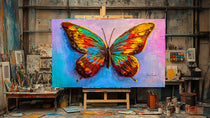


A dragonfly rarely seems to stay still for long. That sense of lightness is exactly what makes dragonfly wall art prints so compelling in a room. They bring the presence of nature indoors without making a space feel overly themed, adding a small moment of color, movement, and quiet beauty to the wall.
For a home that needs warmth rather than clutter, a dragonfly image can do more than fill an empty spot. It can soften a clean-lined office, give a guest room a more personal feeling, or become a graceful focal point above a console, reading chair, or bedside table. The best choice is not simply the prettiest image. It is the work that feels at home with the light, color, and mood already present in your space.
Why Dragonflies Work So Well in Interior Art
Dragonflies carry an unusual visual balance. Their wings are delicate, almost transparent, yet their bodies have a clear graphic structure. In art, that contrast gives the subject presence without heaviness. A close-up dragonfly can feel vivid and sculptural, while a dragonfly set against soft foliage, water, or an abstract wash of color can create a calmer, more dreamlike effect.
There is symbolism here, too, though it does not need to be the reason you choose the work. Dragonflies are often associated with change, resilience, and fleeting summer light. For some collectors, that adds a private layer of meaning. For others, the appeal is simpler: the image reminds them of a garden, a lake, or a quiet afternoon outdoors.
That flexibility makes dragonfly imagery especially useful in lived-in interiors. It can feel elegant in a formal dining room, fresh in a sunroom, and unexpectedly refined in a contemporary workspace. The subject is familiar, but the final feeling depends on the artist's composition, palette, and use of texture.
Choose the Mood Before You Choose the Print
The strongest art decisions begin with atmosphere. Before considering dimensions or print material, look at the emotional temperature of the room. Is it restful and neutral? Bright and social? Layered with warm woods and textiles? A dragonfly print should extend that feeling, or intentionally offer a beautiful contrast.
For calm, light-filled rooms
Choose an image with airy negative space, softened edges, and a restrained palette. Pale blue, misty green, cream, and soft gray can create a sense of open air around the subject. These prints work especially well in bedrooms, bathrooms, and spaces where you want the wall to feel peaceful rather than busy.
A dragonfly placed within a gentle, dreamlike background can also make a small room feel less enclosed. The image draws the eye outward instead of adding visual weight.
For rooms that need color and energy
A vivid dragonfly against saturated color can become the spark a room has been missing. Cobalt, teal, crimson, gold, and lush green all echo the natural iridescence of the insect while bringing a more expressive contemporary character to the wall.
This approach suits entryways, living rooms, creative studios, and offices. It also works well when a room has mostly neutral furnishings and needs one confident visual note. Let the artwork lead, then repeat one small color from the print in a pillow, ceramic piece, or vase. Repetition helps a bold image feel considered rather than accidental.
For a more collected, organic interior
If your home includes wood, linen, woven textures, antique pieces, or botanical accents, consider a dragonfly artwork with visible painterly marks or a richly textured background. Nature-based art does not have to be literal to feel grounded. A layered surface and a luminous subject can bring the room the same sense of life as a garden view.
Scale Matters More Than Most People Expect
A print can be beautiful on its own and still feel too small once it reaches the wall. When selecting dragonfly wall art prints, think about the wall as part of the composition. A petite print surrounded by a large expanse of empty wall may feel tentative, while an oversized work can make a narrow passageway feel crowded.
Above furniture, a useful visual guideline is to choose art that occupies roughly two-thirds to three-quarters of the furniture's width. Above a 60-inch console, for example, a single substantial piece or a thoughtfully arranged pair will usually feel more balanced than one small image centered alone.
There are exceptions. A small dragonfly print can be quietly powerful in an intimate location: beside a doorway, above a writing desk, or within a gallery wall. In that setting, its smaller scale feels like a discovery. Give it enough breathing room, or pair it with complementary works that share a color family or natural theme.
Height matters as well. In most rooms, the center of the artwork should sit near eye level, often around 57 to 60 inches from the floor. When hanging over furniture, keep the art visually connected to what sits beneath it. A gap of about 6 to 10 inches usually creates that relationship without making the arrangement feel compressed.
Select a Material That Suits the Room
The same image can feel remarkably different depending on the surface it is printed on. Material is not only a production choice. It influences color, texture, reflectivity, and the way the work lives with changing daylight.
Fine-art paper is often the natural choice for a softer, classic presentation. It has a tactile quality that pairs beautifully with a framed print and can bring out delicate details in wings, leaves, and atmospheric backgrounds. A frame can also help the work connect with existing finishes in the room, whether that means warm wood, clean white, or a simple black edge.
Canvas has a more dimensional presence. It can be especially appealing for expressive compositions with painterly color, layered texture, or larger fields of abstraction. A canvas print can feel warm and substantial without the visual formality of a traditional frame.
Metal offers a different character altogether. Its clean surface and gentle sheen can make bright color and fine detail feel crisp, which suits modern rooms, polished offices, and interiors with plenty of natural light. It is worth considering glare, however. If the wall receives strong direct sun or faces a bank of windows, observe how light moves through the room before choosing a highly reflective finish.
Let the Artwork Have Space to Breathe
A dragonfly image already contains movement. Give it a setting that lets that movement register. Avoid crowding it with too many small decorative objects, competing patterns, or unrelated wall pieces nearby. A single strong print above a console can be enough, particularly when the surrounding objects are simple: a low lamp, a bowl, a branch clipping, or a few well-chosen books.
If you are creating a gallery wall, use intention rather than symmetry alone. Pair dragonfly imagery with botanical forms, water-inspired abstracts, or other nature studies that share its color and feeling. The goal is not to match every subject exactly. It is to build a visual conversation where each piece has a reason to be there.
Lighting can make an equally meaningful difference. Soft, angled light reveals nuance without flattening the image. In the evening, a picture light or nearby lamp can turn the artwork into a small, inviting point of focus. Protect paper-based prints from prolonged direct sunlight when possible, especially in rooms with intense afternoon exposure.
A Personal Choice, Not a Decorating Formula
Art is at its best when it reflects the person living with it. A dragonfly print may recall a childhood garden, a favorite place near the water, or simply a color that makes you pause. Those instincts deserve as much attention as rules about scale or framing.
At Just Art by John, the idea is simple: beautiful art should bring a room closer to the feeling you want to live with. Choose the dragonfly image that keeps drawing you back. Give it a wall where it can catch the light, hold the eye, and offer a small moment of stillness each time you pass.