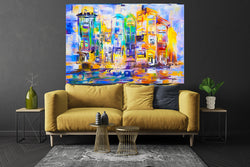


A luminous orchid over a quiet, dreamlike background does not ask to be displayed the same way as a richly textured landscape or a high-contrast wildlife portrait. When choosing canvas vs metal prints, the better option is not simply the more durable or more dramatic one. It is the one that lets the image, the light in your room, and the feeling you want to live with come together.
Both formats can bring fine art into a space with beautiful color and lasting presence. Yet they speak in different visual languages. Canvas feels warm, tactile, and painterly. Metal feels crisp, luminous, and contemporary. Understanding that distinction makes it easier to choose art that feels considered rather than merely coordinated.
Canvas vs Metal Prints: The Visual Difference
A canvas print has a softness that feels at home in spaces designed for comfort and depth. The image is reproduced on a textured canvas surface and typically stretched over a solid frame, giving the artwork a subtle dimensional presence on the wall. Even when the original image is a photograph, canvas can lend it the warmth of a painted work.
That quality is especially appealing for nature-driven art, expressive florals, and paintings with visible brushwork or sculptural texture. A canvas print does not compete with the room for attention. It gathers the eye gradually, inviting a closer look at color, movement, and detail.
Metal prints offer a different kind of clarity. The image is infused into a specially coated metal panel, where colors can appear exceptionally clean and saturated. Highlights often feel brighter, dark tones more defined, and fine detail more immediate. There is no canvas weave to soften the image, which makes metal a natural fit for photography, strong graphic compositions, and scenes with radiant light.
Neither surface is inherently more artistic. The decision is about character. Canvas carries a sense of touch and atmosphere. Metal carries light with confidence.
Choose Canvas for Warmth, Texture, and a Painterly Presence
Canvas is often the natural choice when the artwork is meant to feel like an anchor in a room. It has visual weight without feeling heavy, and its gently textured surface works beautifully with layered interiors - spaces with wood, linen, woven textiles, ceramics, books, or upholstered furniture.
For a living room, bedroom, or welcoming office, a canvas print can create a focal point that feels personal and settled. It is particularly well suited to art with broad fields of color, soft skies, botanical forms, and abstract movement. The surface helps the image feel integrated into the room rather than sharply separate from it.
Canvas is also a thoughtful option for buyers drawn to original paintings but working within a more approachable print budget. It preserves some of the visual language people love in painted art: depth, softness, and an inviting relationship with the wall. A print cannot duplicate the raised acrylic surfaces of an original sculptural canvas work, but canvas can honor the image's painterly spirit more naturally than a glossy presentation.
Consider canvas when your room needs warmth, when the work contains expressive texture, or when you want art to feel calm and enduring from every angle. It is also forgiving in rooms with varied natural light because it has less reflective sheen than metal.
Where canvas tends to shine
Canvas has a beautiful presence above a sofa, bed, fireplace mantel, or console table. It pairs especially well with traditional, transitional, organic modern, and collected interiors. If your goal is a room that feels restful rather than highly polished, canvas often provides the more intuitive answer.
Choose Metal for Light, Detail, and Modern Energy
A metal print has an immediate visual charge. Its smooth surface allows color and detail to come forward with unusual precision, making a sunlit feather, an orchid petal, or a distant horizon feel vivid and close. In the right setting, it can give a room the clarity of a well-framed view.
This format is especially compelling for wildlife photography and botanical images with intricate lines and luminous color. It can also make a dramatic choice for a contemporary abstract, where bold contrasts and clean edges are part of the composition. If the image has deep blacks, sparkling highlights, or an expansive sense of air, metal can make those qualities feel more pronounced.
Metal prints suit rooms that welcome a little visual energy: a modern dining room, a bright entryway, a polished home office, or a professionally designed reception area. They can also work well in spaces where a cleaner surface is practical, such as a kitchen or a covered outdoor entertaining area. Placement still matters, of course. Artwork should be protected from direct weather and excessive moisture.
The trade-off is reflection. A metal print responds more actively to its surroundings than canvas does. That responsiveness can be beautiful near a window or in a room with carefully placed lighting, but it deserves attention before you choose a wall. In a very sunny room, position the work so glare will not interrupt the view of the image.
Where metal tends to shine
Metal is a strong choice for clean-lined interiors, rooms with glass or architectural finishes, and walls that need a focused burst of color. If you want one photograph to feel exceptionally crisp and alive, metal gives it a memorable presence.
Think About the Art Before the Décor
It is tempting to begin with the room's style, but the image itself should lead the decision. A painterly landscape with layered color may gain more from the quiet texture of canvas. A wildlife photograph captured in brilliant morning light may be more fully expressed on metal. The surface should support the personality of the work, not distract from it.
Look closely at the artwork's defining quality. Is it movement in the brushwork? A soft tonal background? The velvety detail of a flower? The precise gaze of an animal? Then ask which material lets that quality remain central.
At Just Art by John, this distinction is part of choosing art with intention. The goal is not simply to fill a wall. It is to bring home a piece that continues to reveal something as the day changes around it.
Light, Scale, and Framing Make the Final Difference
Before ordering, stand where the artwork will hang and notice the light across that wall from morning to evening. Canvas handles changing light with understated grace. Metal reflects it, sometimes beautifully and sometimes too strongly. A bright room is not automatically a reason to avoid metal, but it is a reason to consider placement with care.
Scale matters just as much. A larger canvas can create a substantial, gallery-like focal point because its wrapped edges give it depth. It often looks complete without an additional frame, especially in a room where the furnishings already offer plenty of material texture.
Metal's slim profile can feel clean and architectural, allowing the artwork itself to appear almost weightless on the wall. This is useful in smaller rooms or pared-back interiors, where a bulky frame might feel overly formal. If you are building a salon-style arrangement with several pieces, canvas can bring visual softness; if you are choosing one dramatic image, metal can make a confident statement.
Color should have a say, too. Earthy, muted palettes and layered neutrals often feel especially at ease on canvas. Brilliant blues, jewel tones, bright florals, and detailed black-and-white images can look striking on metal. These are tendencies, not rules. A strong image with a meaningful connection to your home will always matter more than a rigid decorating formula.
Care and Everyday Living
Both canvas and metal prints are made for everyday enjoyment, but each benefits from thoughtful placement. Keep artwork away from direct, prolonged sunlight whenever possible, and avoid areas with constant steam or extreme humidity. Gentle dusting with a soft, dry cloth is usually all that is needed.
Canvas should be handled by the frame or edges rather than pressed on the printed face. Metal's firm surface is easy to maintain, though it should still be treated as fine art rather than a utility surface. Quality materials and secure packaging help a work arrive ready to become part of your space, but where and how you hang it shapes its long-term experience.
The most satisfying choice usually comes from imagining the artwork after the room is quiet: the colors catching afternoon light, the image greeting you at the end of a long day, and the wall feeling more like your own. Choose the surface that lets that moment feel true.