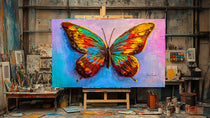


A room can have beautiful furniture, thoughtful lighting, and all the right finishes yet still feel unfinished. Often, what is missing is a visual focal point with enough color and presence to hold the space together. Orchid wall art prints offer that presence with a quieter kind of drama: graceful forms, layered petals, and color that feels alive without asking too much of the room.
Unlike generic botanical décor, a carefully chosen orchid image can feel personal. It brings the stillness of a garden indoors, but it also carries a sculptural quality that works especially well in rooms designed around natural materials, warm neutrals, rich woods, or modern clean lines.
Why orchid wall art prints feel at home almost anywhere
Orchids have an unusual visual balance. Their blooms are intricate, but their stems are spare. Their colors can be soft and atmospheric or strikingly saturated. That contrast makes them adaptable. A pale orchid against a dreamlike background can soften a bedroom, while a vivid magenta or yellow bloom can bring needed energy to an entryway, dining room, or creative office.
There is also a sense of patience in orchid imagery. The flower does not rush the eye. Its curves invite a closer look, making it a natural choice for spaces meant for rest, conversation, and reflection. In a busy room, an orchid print can introduce a moment of stillness without making the design feel overly delicate.
The best choice depends on the feeling you want the room to hold. For a calm, airy interior, look for a composition with open space around the flower and softened background color. For a more expressive room, choose artwork where the orchid fills the frame or where deep shadow and vivid petals create stronger contrast.
Start with the room, not the empty wall
It is tempting to choose art based only on the image itself. But the room will tell you what it needs. Stand back and notice the existing color, the amount of natural light, and the visual weight of the furniture beneath the wall.
A large wall above a sofa, bed, or sideboard usually benefits from one generous print rather than several small pieces. The art should feel connected to the furniture, not as though it is floating too high above it. As a general visual guide, artwork above a major furniture piece often looks most balanced when it spans roughly two-thirds to three-quarters of that piece's width.
Smaller orchid prints have their own purpose. They can bring a gentle point of interest to a hallway, powder room, reading nook, or the wall beside a window. A pair can be especially effective when the images share a color family but show different flowers or compositions. The repetition creates rhythm while allowing each print to remain distinct.
In rooms with little color, an orchid image can lead the palette. Pull one or two tones from the petals into a throw pillow, ceramic vessel, or small accent chair. You do not need to match every shade. A room feels more collected when art is echoed rather than copied.
Choose a color story with intention
Orchid imagery offers far more than purple. White orchids can feel luminous and architectural, especially against dark grounds or soft gray-blue backgrounds. Pink varieties bring warmth and romance without becoming overly sweet when paired with charcoal, olive, espresso, or natural linen. Yellow orchids can brighten a space with the richness of late-afternoon light, while deep violet blooms create a more dramatic, contemplative mood.
Consider the temperature of the room before choosing. If your space has warm oak, tan leather, brass, or creamy walls, an orchid print with coral, pink, gold, or plum can deepen that warmth. In a cooler room with slate, black, chrome, or blue-gray tones, white orchids and violet flowers can create a composed, gallery-like contrast.
A color-rich piece does not need to compete with everything around it. In fact, the more expressive the artwork, the more helpful it can be to keep nearby décor simple. Give the print room to breathe. One small lamp, a low arrangement of branches, or a few books may be enough to let the image do its work.
The right print surface changes the experience
The same orchid photograph or artwork can feel quite different depending on its material. This is not merely a practical choice. Surface, sheen, and texture shape how the image lives with the light in your home.
Fine-art paper is often a beautiful fit for intimate spaces and framed presentations. It lends a refined, tactile quality and works well when you want the artwork to feel classic and collected. A paper print with a generous mat can give a smaller orchid image a sense of importance.
Canvas brings warmth and softness. Its subtle texture can complement organic interiors, upholstered furniture, and rooms where you want art to feel relaxed rather than formal. It is a natural choice for a larger floral statement above a bed or console.
Metal prints offer a clean, contemporary finish with saturated color and crisp detail. They can be especially compelling in bright spaces, modern kitchens, offices, or rooms with a more polished architectural character. Because metal reflects light differently than paper or canvas, consider the wall's exposure. A piece facing strong direct sunlight may show more glare, while a wall with indirect light can allow the color to glow.
At Just Art by John, orchid collections are offered as fine-art reproductions made for real rooms, with premium materials and careful packaging supporting the experience from studio to wall. The ideal format is the one that feels most natural in your space, not simply the one that sounds most luxurious.
Let scale create a focal point
Scale is where many otherwise beautiful art choices go wrong. A small print on a large wall can feel apologetic. A large work in a compact room can feel heavy if there is no visual breathing room around it.
Before ordering, use painter's tape to mark the dimensions on the wall. Live with that outline for a day or two. Notice it from the doorway, from where you sit, and in evening light. This simple step makes size easier to judge than measurements alone.
For a statement wall, a large orchid close-up can feel almost sculptural. Petals become gestures of color and shape, creating impact from across the room. In a smaller setting, a more spacious composition can make the wall feel open rather than crowded. There is no universal best size - proportion, furniture placement, and viewing distance all matter.
Placement is part of the artwork
Art deserves more consideration than a convenient nail location. Hang an orchid print where it can be seen at a comfortable viewing height, generally with the center near eye level. Above furniture, bring it close enough to create a visual relationship, usually leaving a modest gap rather than placing it near the ceiling.
Bedrooms invite quieter placements. A serene orchid above the bed can create a restful anchor, while a smaller work opposite the bed gives you a beautiful first view in the morning. In a dining room, an expressive floral print can add color without the visual busyness of a gallery wall. In an office, orchid art can soften screens, sharp angles, and task-focused surroundings.
Lighting matters just as much. Natural daylight reveals subtle color shifts, while warm picture lighting can make petals feel especially inviting after dark. If a print is framed under glass, test the location for reflections before finalizing placement.
Choose art you will keep noticing
Trend-driven décor has its place, but wall art is most satisfying when it continues to reveal something over time. Look for an orchid image that gives you more than a matching color. Perhaps it is the curve of a stem, the soft blur behind a bloom, an unexpected edge of saturated color, or the sense that the flower was encountered in a real moment of attention.
That is the lasting pleasure of botanical art: it can change with the room, the light, and your own mood. Choose the orchid that makes you pause, then give it a wall where it can quietly become part of the life of your home.