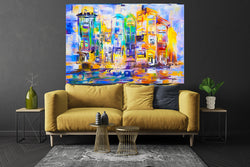


A print can bring the color, presence, and feeling of an artwork into a room without requiring the investment or availability of an original. But what is a giclee print, exactly? It is a high-quality fine-art reproduction made with a specialized inkjet process, chosen for its detail, rich color, and long-lasting materials.
For homeowners and collectors, the word matters because not every print is made to the same standard. A thoughtfully produced giclee can hold the softness of a flower petal, the layered atmosphere of a landscape, or the vivid movement of a painted surface with remarkable fidelity. It is art made to be lived with: a meaningful focal point above a console, a quiet presence in a bedroom, or a gift that continues to reveal itself over time.
What Is a Giclee Print?
The term giclee, pronounced "zhee-clay," comes from a French word related to spraying or spraying droplets. In fine-art printing, it describes a process that uses high-resolution inkjet printers to place extremely small droplets of ink onto an archival-quality surface.
Most fine-art giclees are produced with pigment-based inks rather than standard dye inks. Pigment inks are valued for their stability and depth of color, particularly when paired with papers, canvas, or other substrates made for archival printing. The result is a reproduction with smooth tonal shifts, crisp detail, and a color range that can feel close to the original artwork or photograph.
A giclee print begins with a carefully prepared digital file. For a painting, that may mean professionally photographing or scanning the original under controlled lighting, then adjusting the file so that the printed colors remain faithful to the work. For photography and digital art, the original high-resolution image is prepared for the chosen print size and surface.
The printer, ink, file, and material all work together. A beautiful source image printed on ordinary paper will not have the same visual depth as a properly produced giclee on fine-art paper or canvas.
Why Giclee Quality Is Different
The difference is often easiest to see in the details. A high-quality giclee can preserve delicate transitions in a soft, dreamlike background, the fine lines in wildlife photography, or the layered blues, greens, and warm neutrals that give a nature-inspired piece its mood.
Color accuracy is especially important for art. A red that prints too orange, a green that turns dull, or a deep shadow that loses its subtle variation can change the entire feeling of a work. Fine-art printers use color-managed workflows to help the printed piece reflect the artist's intended palette as closely as possible.
Detail matters, but it is not the only measure of quality. A giclee should also have visual warmth. On the right paper, a photograph can show remarkable clarity without looking harsh. On canvas, a painting can retain a painterly character and a softer, more tactile presence. The best choice depends on the art itself and how you want it to feel in your space.
There is one important distinction: giclee is a printing method, not a universal guarantee. The word is sometimes used loosely in the marketplace. A seller may call any inkjet print a giclee, even if the materials, color preparation, or production standards are modest. Ask what inks and substrate are used, how the work is reproduced, and whether the print is made with archival materials. Clear answers are a good sign of a print created with care.
Giclee Prints on Paper, Canvas, and Metal
A giclee reproduction can take on a different personality depending on its surface. There is no single best substrate. Each one changes the way color, texture, and light move through the artwork.
Fine-art paper
Fine-art paper is often the natural choice for botanical imagery, photography, illustration, and artwork with nuanced color or intricate detail. It may have a smooth, matte finish or a lightly textured surface reminiscent of traditional art paper. Matte paper reduces glare and gives an image a quiet, refined appearance, especially when framed behind glass or acrylic.
Paper prints are often the most flexible option for interiors. A frame can shift their character from classic to contemporary, and a generous mat can give a smaller image more breathing room on the wall. For a room with soft daylight and layered textiles, fine-art paper can feel intimate and considered.
Canvas
Canvas prints offer a more painterly, dimensional look. The woven surface gently diffuses fine detail while giving color a tactile character. This makes canvas particularly appealing for reproductions of paintings, where a flat paper print may not convey the same sense of movement.
A canvas giclee can be gallery-wrapped around a wooden stretcher bar, allowing the image to continue around the sides and creating a clean, frameless presentation. It works beautifully when you want art to have visual presence without the reflection of glass.
Still, a canvas reproduction does not become an original painting. If the original has sculptural acrylic texture, raised marks, or built-up dimensional elements, a print can faithfully capture the appearance of that texture but not its physical relief. That trade-off is honest and worthwhile: a reproduction makes the image accessible, while an original offers the singular surface created by the artist's hand.
Metal
Metal prints have a distinctly modern character. The image is transferred to a coated aluminum panel, producing luminous color, sharp detail, and a sleek finish. They can be especially striking for high-contrast photography, water scenes, dramatic skies, and images with strong color.
Because the surface is durable and easy to clean, metal can be practical in bright spaces and contemporary interiors. Its sheen is part of its appeal, though it can also create more reflection than matte paper or canvas. Consider the lighting in the room before choosing it.
Are Giclee Prints Limited Edition?
A giclee print may be open edition or limited edition. The printing process itself does not determine which it is.
An open-edition print can be produced as long as the artist chooses to offer it. This makes it an approachable way to bring meaningful art into a home, whether you are starting a collection or completing a room. A limited edition has a defined number of prints, often numbered and sometimes signed by the artist. Once that edition is complete, no additional prints in that format and size are made.
Neither format is automatically better. Limited editions can appeal to collectors who value scarcity and a more defined connection to a particular release. Open editions offer flexibility, availability, and a lower barrier to choosing art you genuinely love. The most lasting value is often the one you feel when the work becomes part of your daily surroundings.
How to Choose a Giclee Print for Your Space
Begin with the image, not just the wall measurement. Notice what draws you in: the color, the mood, the subject, or the way the composition creates a moment of stillness. Art is more likely to remain meaningful when it gives you something to return to.
Then consider scale. A small print can be beautiful in a reading nook, along a hallway, or as part of a grouped arrangement. Over a sofa, bed, or large credenza, a larger work usually has the presence needed to anchor the room. When in doubt, tape out the dimensions on the wall before ordering. It is a simple way to see how the artwork will relate to furniture and open space.
Think about the room's light as well. Matte fine-art paper is calm and low-reflective. Canvas has warmth and softness. Metal carries more brightness and visual energy. A print should complement the room, but it does not need to disappear into it. A well-chosen work can introduce the color that makes a space feel complete.
Caring for a Fine-Art Giclee
With sensible placement and care, a giclee print is designed to offer years of enjoyment. Keep paper prints away from direct, prolonged sunlight and high humidity. If framing a paper print, use archival mats and backing, and avoid pressing the artwork directly against glass.
Canvas and metal are more forgiving in day-to-day settings, but they still benefit from being kept away from excessive moisture, heat, and direct sun. Dust gently with a clean, dry microfiber cloth. Avoid household cleaners unless the print maker specifically recommends them.
Professional packaging matters, too. Fine-art prints should arrive protected from bending, scuffs, and moisture, whether they are shipped flat, rolled appropriately, or prepared as a finished canvas or panel.
A giclee print is not simply a lower-cost substitute for original art. It is its own considered format: a way to carry an artist's image, color, and point of view into more homes. Choose the work that holds your attention, give it a place where you will see it often, and let it become part of the atmosphere you are creating.