

Table of Contents
- Why Limited Edition Giclée Prints Belong in a Serious Collection
- Giclée Prints vs. Original Art: Cost, Scarcity, and What You Actually Own
- Giclée Print Longevity: Archival Inks, Paper, and Fade Resistance
- Fine Art Print Value Factors: What Separates a $150 Print From a $1,500 One
- How to Collect Fine Art Prints Without Overpaying
- The Investment Case: Realistic Returns, Resale, and Risk
- Giclée Prints Worth Starting With
- Conclusion
- Frequently Asked Questions
Last Updated: October 17, 2026
Why Limited Edition Giclée Prints Belong in a Serious Collection
A limited edition giclee is a fine art reproduction produced with pigment inks on archival paper or canvas, released in a fixed, numbered quantity and signed by the artist.
The economics are straightforward. An original painting is one of one; a limited edition giclée is one of fifty, one hundred, or two hundred, and priced accordingly. You get the same image, the same color accuracy, and the same archival materials, at a fraction of the cost of the original.
Below, we break down what you actually own, what drives value, and where the real risks sit. Most guides skip that last part. We won't.
Giclée Prints vs. Original Art: Cost, Scarcity, and What You Actually Own
The giclée prints vs. original art comparison comes down to three variables: price, uniqueness, and control.
An original artwork is a singular object. Its scarcity is absolute, which is why it commands the highest prices and why resale can be unpredictable. A limited edition giclée print is scarce by agreement: the artist commits to a fixed run and stops printing when it sells out.
- Original art: one physical piece, highest cost, no reproduction
- Limited edition giclée: numbered run, moderate cost, signed and documented
- Open edition print: unlimited run, lowest cost, no scarcity value
What you own with a limited edition is the image plus the documentation: the number, the signature, and the edition record. That paperwork is the asset.
What a Limited Edition Number Actually Means
A limited edition number tells you exactly where your print sits in the run. "12/50" means this is the twelfth print pulled from a total edition of fifty.
Once those fifty are gone, the edition is closed. A responsible artist does not reprint. That commitment is what gives a numbered edition its scarcity, and scarcity is the mechanism behind any appreciation in market value.
Ask for the edition size before you buy. An artist who cannot tell you the total run is an artist who has not thought about your resale value.
Giclée Print Longevity: Archival Inks, Paper, and Fade Resistance
Longevity is the strongest argument for giclée over mass-market reproduction. Giclée printing uses pigment inks rather than dye-based inks, and pigment particles resist fading far better when exposed to light.
The variables that determine how long a print lasts:
- Ink type: pigment inks hold color longer than dye inks
- Paper or canvas quality: archival, acid-free substrates resist yellowing
- Lightfastness rating: the measure of how well a print resists fading under exposure
- Display conditions: direct sunlight and humidity shorten any print's life
Framing matters as much as the print. UV-filtering glass and a mat that keeps the surface off the glazing slow deterioration significantly. Hang away from direct sun and keep humidity stable.
Fine Art Print Value Factors: What Separates a $150 Print From a $1,500 One
Fine art print value factors are not mysterious. They come down to a short list of measurable attributes, and the gap between a modest print and an expensive one is usually explained by three or four of them.
| Value Factor | What to Check | Why It Matters |
|---|---|---|
| Edition size | Total number in the run | Smaller runs are scarcer |
| Artist reputation | Exhibition and sales record | Drives collector demand |
| Signature | Hand-signed vs. printed | Signed editions carry more value |
| Materials | Archival inks and acid-free substrate | Determines longevity |
| Documentation | Certificate and provenance | Enables resale |
| Image quality | Color accuracy and fine detail | Separates giclée from poster printing |
A print at the lower end of the range is usually an open edition on standard stock, while a limited edition giclee sits at the higher end. A print at the higher end is a small, signed, documented edition on archival materials.
Authenticity, Provenance, and the Paper Trail
Authenticity is the single most neglected part of buying art prints. A certificate of authenticity should name the artist, the title, the edition size, the print number, and the production method.
Provenance is the record of ownership. For a new print, provenance starts with the gallery invoice and the certificate. Keep both. If you ever sell, that paper trail is what separates your print from an unverifiable one.
How to Collect Fine Art Prints Without Overpaying
Collecting prints rewards patience and penalizes impulse. The collectors who do well follow a repeatable process rather than buying whatever catches their eye first.
- Set a budget per piece and stick to it. Decide what a single print is worth to you before you browse.
- Buy the image you will still want in ten years. Trend-driven purchases rarely hold value.
- Confirm the edition size and number. A large open edition has no scarcity.
- Request the certificate of authenticity before purchase. No documentation, no deal.
- Check the materials. Pigment inks and acid-free substrate are the baseline.
- Buy from the artist or a gallery that represents them. Direct provenance is cleaner.
- Frame it properly from day one. UV glass and archival matting protect your investment.
That sequence filters out most overpriced purchases. The single most common mistake is buying a large edition print at a small edition price because the marketing sounded exclusive.
Giclée – Peaceful Easy Feeling →
The Investment Case: Realistic Returns, Resale, and Risk
Here is where most articles on this topic lose their nerve. Limited edition giclée prints are collectible objects, not liquid financial instruments. That distinction matters because the word "investment" gets used loosely in art marketing, and collectors who treat prints like stocks usually end up disappointed.
What Realistic Appreciation Looks Like
Appreciation is possible but not guaranteed. Value tends to follow the artist's career, not the print itself. A print by an artist who gains gallery representation, museum attention, or a strong secondary market can rise in value. A print by an artist who does not build that trajectory may hold its value or sell below the original price. Most practitioners find that the prints that appreciate are the exception, not the rule, and that the holding period is measured in years, not months.
Where Prints Are Actually Resold
Resale happens through a few channels, each with its own trade-offs.
- Galleries: A gallery that represents the artist may take consignments, typically for a commission. The advantage is credibility; the disadvantage is that the gallery may prioritize new work.
- Auction houses: Suitable for established artists with a sales record. Auction houses charge seller's commissions and may set estimates that do not reflect what you paid.
- Private sales: Direct to another collector, often through artist networks or online communities. No commission, but you bear the work of finding a buyer and verifying the transaction.
- Online marketplaces: Broad reach, but buyers often expect discounts, and authentication is on you.
Transaction Costs and Liquidity
Transaction costs erode returns in ways that are easy to overlook. Framing, shipping, insurance, and commission all reduce your net proceeds. A print that sells for more than you paid can still leave you with less after costs. Liquidity is low: you may wait months to find a buyer for a mid-priced print, and asking prices on listings often differ from realized sale prices. A common pattern is that a print listed at one price sells for meaningfully less after negotiation, which is why comparable sales matter more than asking prices.
How Edition Size and Scarcity Affect Price
Edition size, artist demand, print condition, and comparable sales can influence price, but there is no fixed formula. A smaller edition is scarcer, but scarcity alone does not create demand. A large edition by a highly sought artist can outperform a small edition by an unknown one. Condition matters: a print with handling marks or fading sells at a discount. Comparable sales, what similar prints by the same artist have actually sold for, are the most reliable reference point, and they are often hard to find for emerging artists.
The Honest Framing
Buy a limited edition giclée because you want to live with the work. Treat any appreciation as a bonus, not a plan. Collectors who buy well and hold long-term do best; collectors who buy to flip usually do not. The risk is not that the print will become worthless, it is that you will confuse collectible appeal with a dependable financial return.
Giclée Prints Worth Starting With
A first purchase should be a piece you would happily keep if it never gained a dollar in value. Our own collection is built on that principle, and every print ships as a gallery-wrapped canvas with free shipping.
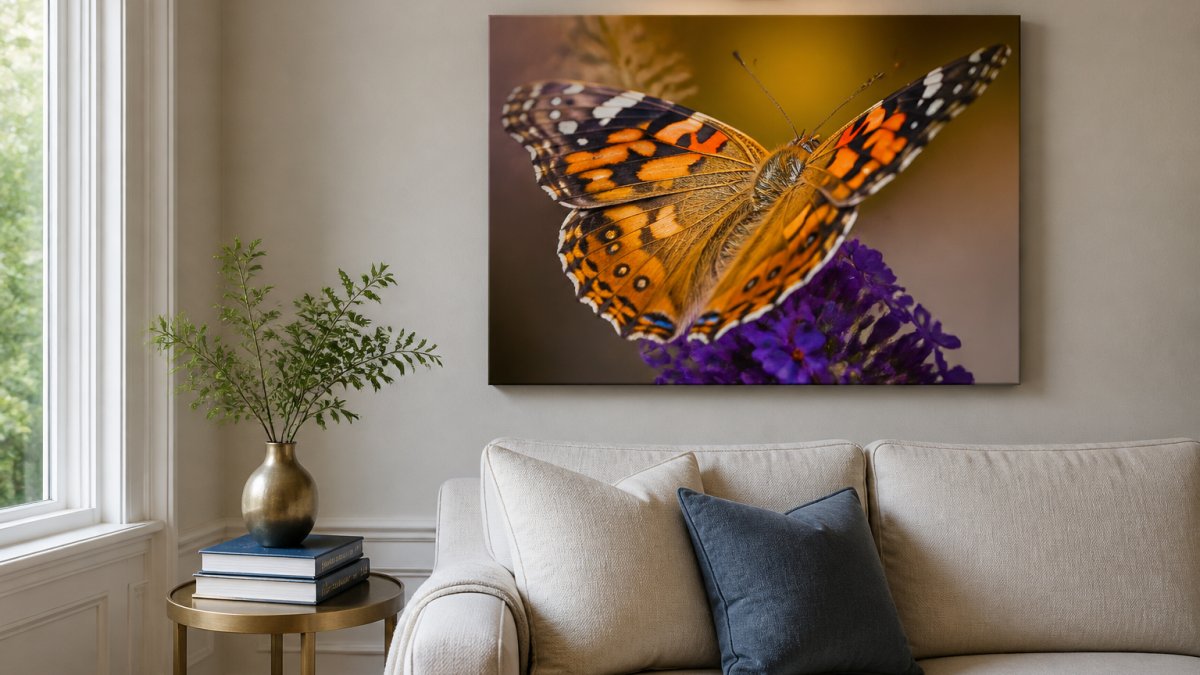
Giclée - Nature's Colors is the natural entry point. It is a signed giclée at 24 x 36 inches, canvas with foam backing and a hanger included, priced at $149.00.

Giclée - Peaceful Easy Feeling runs 30 x 20 inches at $155.00, a calm, warm composition that suits a living room or bedroom wall.
Each is produced as a giclée on gallery-wrapped canvas, and each is a piece we would hang in our own space.
Conclusion
The hard part of collecting is not finding prints. It is separating a documented, signed, small-edition giclée from a poster with a nice frame. That distinction is what protects your money and your enjoyment.
At Just Art by John, every piece is created by John Cranshaw and offered as either an original work or a fine art giclée print, with archival production, and free shipping on every order. Start with a single print you would keep regardless of value, and build from there.
Frequently Asked Questions
How long will a giclée print last?
A properly produced giclée print on archival paper or canvas, printed with pigment inks, is typically rated to hold its color for decades under normal indoor display. Longevity depends on three things: the ink type, the substrate, and how the piece is framed and hung. Pigment inks resist fading far better than dye-based inks, and archival paper or canvas gives the ink a stable surface. Keep the print out of direct sunlight and away from damp rooms, and use UV-filtering glazing when framing. Under those conditions, giclée print longevity is measured in generations, not years.
Do limited edition giclée prints increase in value?
Some do, most do not. Value growth depends on demand for the specific artist, the edition size, how many prints from that edition remain available, and whether the piece has a documented signature and certificate of authenticity. A limited edition giclée from an artist with a rising exhibition record and a small edition can appreciate. A large edition from an unknown name usually resells at or below its purchase price. Treat appreciation as a possible bonus, not a promise, and buy the image because you want to live with it.
What should I check before buying a giclée print?
Ask four questions. First, what is the edition size, and what number is this print? Second, does it come with a certificate of authenticity? Third, what inks and substrate were used, since pigment inks on archival stock are what make a fine art print last. Request a photo of the actual print rather than a digital mockup, and confirm the exact dimensions before you commit wall space.
Is it worth buying limited edition prints instead of originals?
It depends on what you want from the purchase. An original artwork is a one-of-one object with the highest scarcity and typically the highest price. A limited edition giclée gives you the same image at a fraction of the cost, with a numbered edition that caps supply. For buyers building a collection on a budget, prints let you own several strong pieces instead of one. For buyers chasing maximum long-term resale potential, originals usually win. Many collectors do both: originals as anchors, prints to fill out a wall.
Ready to add a documented, signed giclée to your collection? Browse the Just Art by John gallery, compare edition details and sizes side by side, and choose the piece that fits your wall. Every order ships free, and every print is made to last.