

Table of Contents
- Why Restaurant Art Hanging Is Different From Home
- What You'll Need Before You Start
- Step 1: Map Your Zones and Available Wall Space
- Step 2: How High to Hang Wall Art in a Restaurant
- Step 3: Choose Commercial Wall Art Hanging Hardware
- Step 4: How to Hang Pictures Like an Art Gallery, Even in a Busy Dining Room
- Step 5: Restaurant Wall Art Ideas That Hold Up to Service
- Common Mistakes to Avoid
- Frequently Asked Questions
Last Updated: October 7, 2026
Why Restaurant Art Hanging Is Different From Home
You cannot hang art in restaurants the same way you hang art at home. A restaurant wall must survive slammed doors, hot kitchens, cleaning crews, and a dining room that changes with every season.
Most guides skip this. Home advice assumes calm; restaurants run hot and crowded, so hardware, height, and placement all have to work harder.
This guide from Just Art by John walks through the full process, from mapping your wall space to picking hardware that holds up under service. We sell original work and fine art Giclèe prints to restaurants, so we care about one thing: art that still looks right two years in.
What You'll Need Before You Start
Gather your tools first so you are not climbing down a ladder every five minutes.
- Tape measure and a long spirit level
- Painter's tape for marking heights
- Pencil and a notepad
Check the wall type before you buy hardware. Drywall, plaster, brick, and tile each need different anchors. A 20-pound canvas on drywall needs a real anchor, not a plastic sleeve from a kit.
Weigh every piece before it goes up, then add 50% when you pick hardware, because restaurant art takes sideways knocks a living room never delivers.
Step 1: Map Your Zones and Available Wall Space
Map your zones before you drill a single hole. Walk the room, note every wall, and sort them by who sees them and when.
A restaurant has four basic art zones, each wanting a different size, style, and level of protection.
Entrance and Main Wall
The entrance wall is your anchor point. Guests see it while they wait, so it carries the most visual weight: a large statement piece or a tight grouping of three to five framed prints.
Measure the available wall space, then aim for art that fills roughly 60 to 75% of it. Too small looks bare; too large feels cramped.
Dining Room and Bar
Dining room walls sit at seated eye level, which changes everything. Keep pieces smaller here and space them so no frame sits behind a server's path.
Bar walls get more traffic and more spills. Choose pieces you can wipe clean without damage.
Restrooms and Back-of-House Corridors
Restrooms and corridors are low-risk zones for valuable work. Humidity in restrooms is the enemy, so use sealed frames and avoid unframed canvas near sinks.
Back-of-house corridors suit rotating prints: staff see them daily, and you can swap them without disrupting the dining room.
Step 2: How High to Hang Wall Art in a Restaurant
But restaurants are not galleries. Two adjustments matter more than the number itself.
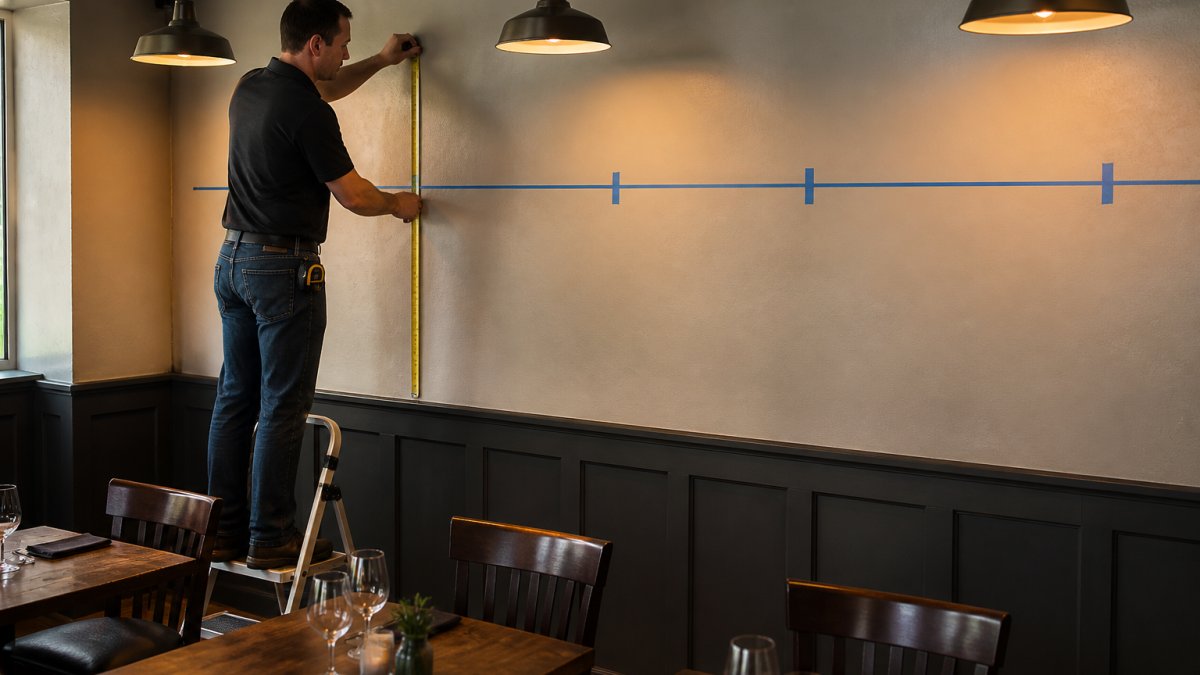
First, seated eye level is lower, around 48 to 52 inches.
Second, keep art above chair backs and below the top of booth dividers.
Use one center line across a whole wall. If three pieces hang in a row, their centers should sit at the same height; misaligned centers make a room look unfinished.
Bouchon Bistro — A Taste of France in Napa Valley →
Step 3: Choose Commercial Wall Art Hanging Hardware
Commercial wall art hanging hardware is any fixing system rated for public spaces, heavy pieces, and repeated contact. French cleats, Z-bar brackets, and security hangers qualify; standard picture wire does not.
Most guides stop at a product list. What actually keeps art on the wall is matching the fixing to the wall material, because a bracket rated for 100 pounds still fails if the anchor behind it pulls out.
Match the Fixing to the Wall Material
- Drywall. Standard half-inch drywall holds almost nothing on its own. Use a toggle bolt or heavy-duty strap anchor that spreads load behind the panel; a plastic sleeve anchor is not enough for anything heavier than a small frame.
- Plaster and lath. Older dining rooms often have plaster over wood lath. Plaster cracks under point load, so drill a clean hole, avoid over-tightening, and anchor into the lath or a stud where possible. A French cleat spread across two studs is the safest pattern.
- Brick and block. Use sleeve anchors or masonry screws sized to the hole. Do not rely on the mortar joint alone; it crumbles under vibration from a slammed door.
How the Main Options Compare
| Hardware | Best For | Weight Range | Security Level |
|---|---|---|---|
| French cleat | Large canvas, mirrors | 50-200 lbs | High |
| Z-bar bracket | Wide framed prints | 30-150 lbs | High |
| Security hanger | High-traffic walls | 20-100 lbs | Very high |
| Two anchored hooks | Small framed prints | 5-30 lbs | Medium |
French cleats are the default pick for anything wide.
Z-bar brackets work the same way on a slimmer profile, which suits framed prints where you want the frame close to the wall.
Security hangers add a locking screw or strap that ties the frame to the wall. Use them in corridors where cleaning carts pass, in bars where guests lean, and anywhere a piece could be lifted off.
Installation Mechanics That Prevent Failures
- Two fixing points minimum, every time. A single point lets the piece pivot, and a pivoting frame is a frame that falls.
- Add 50% to the weight when you pick hardware. Art in a restaurant takes sideways knocks and vibration a living room never delivers, so the rated capacity should exceed the actual weight by a wide margin.
- Pre-drill every hole. It stops the bit from wandering and stops plaster and tile from cracking.
Step 4: How to Hang Pictures Like an Art Gallery, Even in a Busy Dining Room
To hang pictures like an art gallery, build a repeatable measuring process and follow it on every wall. Galleries measure, mark, and check with a level before the first hole goes in.
Here is the process we recommend.
- Mark your center line at the chosen height with painter's tape.
- Measure the width of each piece and note the gap you want between them.
- Add the widths and gaps to get the total run.
- Find the center of the wall and mark the center of the run.
- Mark each piece's center point along the tape line.
- Mark the hardware position on the back of each frame.
- Drill, anchor, and mount one piece at a time.
- Check level after every piece, not just at the end.
Spacing, Alignment, and the 70/30 Rule
The 70/30 rule keeps groupings from looking crowded or lost.
For gaps between frames in a group, use 2 to 3 inches. Tighter looks like a single unit. Wider looks like separate pieces.
Keep the top edges aligned on a horizontal row. Keep the centers aligned on a vertical stack. Mixing both in one grouping is what makes a wall look messy.
Step 5: Restaurant Wall Art Ideas That Hold Up to Service
Restaurant wall art ideas should start with durability, not just looks. A piece that fades, warps, or collects grease costs you twice: once to buy, once to replace. Dining room conditions are closer to a kitchen than a gallery, so choose materials that tolerate heat, moisture, grease, and repeated cleaning.
What the Room Does to Art
- Humidity. Steam from dishwashers, restroom hand dryers, and open kitchens pushes moisture into frames. Paper prints can ripple, canvas can sag, and wood frames can swell. Sealed frames and moisture-resistant mounts hold up better.
- Grease and cooking aerosol. In rooms near an open kitchen or fryer, a fine film settles on every surface, including glass and canvas. It dulls colors and traps dust. Smooth, wipeable surfaces clean up; textured or unglazed surfaces do not.
- Sunlight and UV. A west-facing window can fade a print within a season. UV-filtering glazing and fade-resistant inks slow the damage, but rotating pieces away from direct sun is the real fix.
Materials That Hold Up Best
- Framed Giclèe prints behind glass or acrylic. Easy to wipe, stable in humidity, and available in any size. Choose acrylic over glass in high-traffic zones because it resists shattering if struck.
- Gallery-wrapped canvas. No frame to snag, light weight, and simple to dust. Best away from fryers and open kitchens, where grease settles into the weave.
- Photography in metal or acrylic mounts. Flat, modern, and resistant to warping. Metal prints tolerate humidity well and wipe clean easily.
Match the Subject to the Room
Warm, food-related scenes suit a bistro. Bold abstracts suit a bar. Quiet nature work suits a corridor or private dining room. The subject matters less than the surface: a bold abstract on canvas in a bar survives better than a delicate watercolor behind glass in the same spot.
Cleaning and Maintenance Routine
- Dust canvas weekly with a dry, soft cloth or a soft brush. Do not use water on unsealed canvas.
- Wipe glass and acrylic with a non-ammonia cleaner and a microfiber cloth. Spray the cloth, not the art, so liquid does not run behind the frame.
- Check hardware every few months, and always after a busy season. Tighten cleats and confirm anchors are still seated.
Our own collection leans into that idea. Bouchon Bistro, A Taste of France in Napa Valley is a Giclèe gallery-wrapped canvas built around a real bistro interior, and it suits a dining room with a classic French menu. Moon Cafe is an original painting with warm evening tones, and it works as a focal piece near a bar or entrance.


Common Mistakes to Avoid
The same handful of errors show up in almost every restaurant we see. Fix these and your walls will outlast your menu.
- Hanging too high. Art above 60 inches at the center feels detached from the room.
- Using home-grade hardware. Picture wire and single nails fail under restaurant traffic.
- Ignoring the cleaning crew. A frame that catches a mop handle will not stay level for long.
Every restaurant reaches a point where the walls stop matching the food. The room feels flat, guests linger less, and the space stops telling a story. At Just Art by John, we make original paintings and fine art Giclèe prints that give a dining room a real focal point, from gallery-wrapped canvas to one-of-a-kind work by John Cranshaw.
Frequently Asked Questions
What height should art be hung at in a restaurant?
Center artwork at 57 to 60 inches from the finished floor to the center point, matching standing eye level for most guests. In dining areas where people sit for long periods, some operators drop the center to 54 to 57 inches so seated guests get a better view. Use the same height across a room for a consistent sightline, and measure from the floor up, not from the ceiling down.
How do you hang art safely on restaurant walls?
Match the anchor to the wall material and the weight of the piece. Drywall needs toggle bolts or heavy-duty anchors, masonry needs sleeve anchors, and wood studs can take lag bolts. Add a security bracket or a secondary tether for anything valuable or in a high-traffic zone. Keep frames clear of chair backs and server paths so guests and staff do not bump them.
What is the 70/30 rule in art, and does it work for restaurant walls?
The 70/30 rule splits a wall between 70 percent art and 30 percent open space, which keeps a display from feeling crowded. It works well on a restaurant main wall or a bar backdrop where you want visual impact without clutter. On smaller walls, scale it down: treat 70 percent as the art footprint relative to furniture width, not the entire wall.
Is it okay to hang art in a restaurant kitchen?
Only if the piece tolerates heat, grease, and moisture. Canvas and unglazed prints absorb cooking vapors and will discolor over time. If you want art near a kitchen pass or open kitchen line, choose a glazed or sealed piece and mount it on a wall away from direct steam and fryer splash. Most operators keep kitchen walls bare and save art for dining and bar zones.