

Table of Contents
- Why Orchid Prints Work in 2026 Interiors
- Phragmipedium Allison Strohm: A Standout Orchid Print
- Giclée vs Original Art Value: What You're Actually Buying
- Best Fine Art Prints for Modern Living Spaces
- How to Style Botanical Wall Art in Any Room
- Frequently Asked Questions
Last Updated: September 13, 2026
Why Orchid Prints Work in 2026 Interiors
Orchid prints are photographic or painted artworks featuring orchid blossoms, reproduced on paper or canvas for wall display. They bring organic color and structure to interiors that have moved toward warmer, nature-led palettes. This guide from Just Art by John walks through the strongest options, what separates a fine art print from a decorative one, and how to hang them well.
Interior designers have spent the last two years trading stark minimalism for layered, botanical warmth. Orchid prints fit that shift because the flower itself is architectural: long stems, precise petals, and a silhouette that reads clearly from across a room. A common mistake is treating them as filler art. Hung properly, a single orchid photograph anchors a wall the way a mirror or a large abstract would.
Below, we break down the standout pieces worth considering, how giclée reproduction actually works, and the sizing rules that keep botanical art from looking like an afterthought.
Phragmipedium Allison Strohm: A Standout Orchid Print
The Phragmipedium Allison Strohm is a photographic orchid print from Just Art by John, priced at $125.00, and it earns its place as the strongest single-orchid option on this list. The image captures delicate blossoms in rich, vibrant color, with the natural curves and intricate petal detail that make slipper orchids so distinctive.

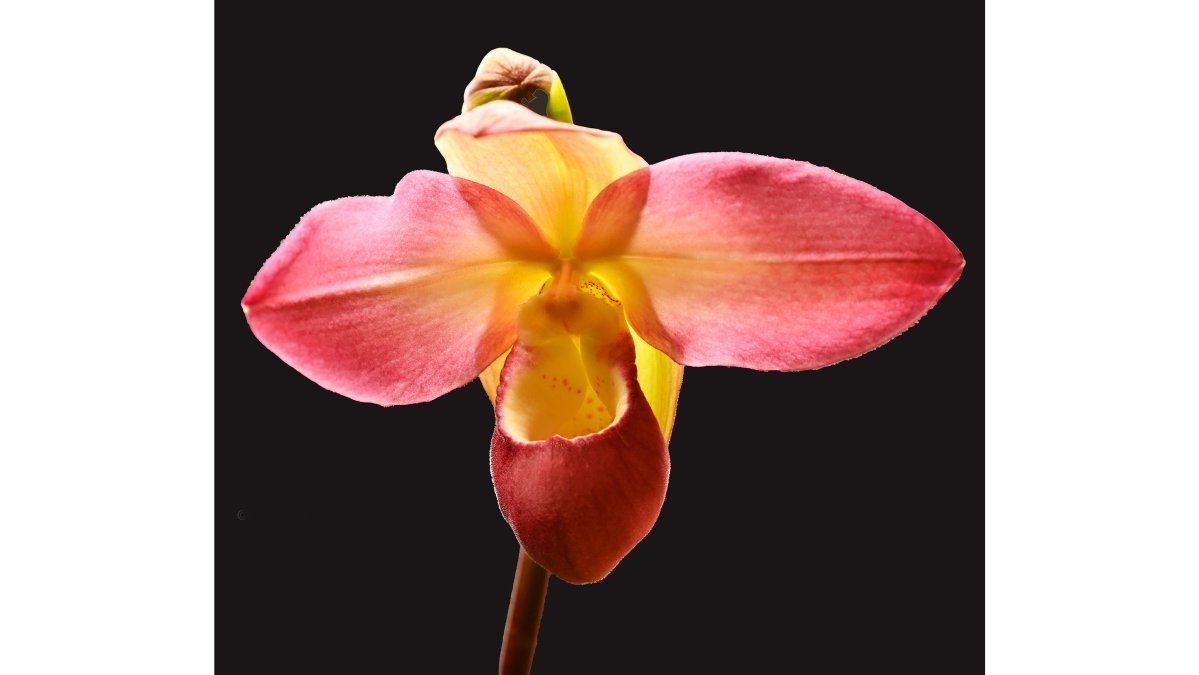
What sets this piece apart is its restraint. The composition creates a calm, sophisticated feeling rather than a burst of tropical color, which is why it works in a living room, bedroom, or office without competing with the furniture. Most orchid prints on the market lean into saturation; this one holds back, and that is precisely the point.
Giclée vs Original Art Value: What You're Actually Buying
The giclée versus original art value question comes down to one distinction: an original painting is a single physical object, while a giclée print is a high-quality reproduction of an image. Both can be worth owning. They serve different purposes and different budgets.
Giclée is a fine art printing method that uses pigment-based inks sprayed onto archival paper or canvas at very high resolution. The Library of Congress guidance on inkjet print preservation notes that pigment inks on appropriate media are among the more stable digital print types, which is why galleries use the process for limited editions.
How Giclée Prints Are Made
A giclée print starts with a high-resolution capture of the original artwork, then moves to color-managed proofing so the printed output matches the source. Pigment inks are applied in microscopic droplets, typically at resolutions well beyond what a standard poster press achieves. The result is smooth tonal gradation and detail that survives close inspection.
The practical difference for a buyer: a giclée holds its color and detail far longer than an offset poster, and it is produced in far smaller quantities. That combination is what supports its value.
When an Original Painting Makes More Sense
An original makes more sense when you want a one-of-a-kind object, when the artist's hand and surface texture are the point, and when you are building a collection with long-term significance. Prints win when you want the image at a fraction of the cost, when you need a specific size, or when you are furnishing multiple rooms.
Best Fine Art Prints for Modern Living Spaces
The best fine art prints for modern living spaces share three traits: a clear focal subject, a restrained palette, and enough resolution to look sharp at large sizes. Orchid photography hits all three, which is why it has become a staple in contemporary interiors.
When you are comparing options, judge them on these criteria rather than on price alone:
| What to Check | Why It Matters | Red Flag |
|---|---|---|
| Paper or canvas type | Affects longevity and texture | Unlisted substrate |
| Ink type | Pigment resists fading | "Standard" ink, no detail |
| Edition size | Smaller runs hold value | Open edition, unlimited |
| Resolution at size | Large prints stay sharp | Soft detail up close |
| Color accuracy | Matches what you saw online | Oversaturated product photos |
That last row matters more than most buyers expect. A common mistake is ordering a print that looked vivid on a screen and discovering the actual piece is muted, or the reverse. Ask for a paper sample or a proof when the seller offers one.
How to Style Botanical Wall Art in Any Room
Styling botanical wall art starts with scale. The single most common error is hanging a print that is too small for the wall behind it, which makes even a good piece look lost. Measure the furniture below the wall first, then size the art to roughly two-thirds to three-quarters of that width.
Sizing and Placement Basics
- Center the art 57 to 60 inches from the floor to its midpoint, the standard gallery height
- Leave 6 to 10 inches between the bottom of the frame and the top of a sofa or console
- Group two or three smaller prints in a tight grid rather than scattering them
- Keep at least one wall in the room free of art so the eye has somewhere to rest
Framing Choices That Protect Your Print
Framing protects the print as much as it presents it. Use archival matting and UV-filtering glazing, and make sure the artwork does not touch the glass. For a photographic orchid print, a thin natural wood or black frame with a wide white mat keeps the focus on the blossom. American Institute for Conservation guidance on framing works on paper recommends acid-free materials throughout, since acidic backing board is one of the most common causes of premature yellowing.
For buyers weighing a print against a painting, the Smithsonian American Art Museum's resources on collecting prints offers useful context on how editions and printmaking fit into a collection.
Choosing art for a home is really a question of confidence: will this piece still look right in five years, and will it look right on this wall? Orchid prints answer both when the image is strong and the framing is done properly. Just Art by John offers original works and fine art giclée prints, including the Phragmipedium Allison Strohm orchid photograph, each created by John Cranshaw and available as a finished, gallery-quality piece. Browse the collection and find the orchid print that fits your space.
Frequently Asked Questions
What is the difference between a giclée print and a standard poster?
A giclée print uses pigment-based inks and archival paper, which resist fading for decades under normal display conditions. A standard poster typically uses dye-based inks on thinner paper and can show noticeable fading within a few years. For orchid prints meant to anchor a room long-term, the giclée process is the better choice. It also holds finer color gradations, which matters for the delicate petal tones in botanical work.
How do I choose the right size orchid print for my wall?
Measure the wall space first, then aim for artwork that fills roughly two-thirds to three-quarters of the width above a sofa, console, or bed. A single large orchid print often reads better than several small ones because the flower's curves need room. For narrow walls or hallways, a vertical orchid print works well. Tape the dimensions on the wall before ordering to confirm the scale feels right.
Are orchid prints considered timeless for home decor?
Orchids have appeared in botanical art for centuries, which gives them staying power that trend-driven prints lack. The 2026 interior direction leans toward nature-inspired, calm palettes, and orchid prints fit that shift without feeling dated. Choosing a print with a neutral background and strong single-subject composition helps it work across future paint colors and furniture changes. That flexibility is what separates a lasting piece from a seasonal one.
How should I frame fine art orchid prints to protect them?
Use acid-free matting and UV-filtering glass or acrylic to prevent yellowing and fading. Keep the print from touching the glass by using a mat, which also adds visual breathing room around the flower. Hang away from direct sunlight and heat sources like vents or radiators. For larger orchid prints, choose a frame with a sturdy backing so the paper stays flat over time.