

Table of Contents
- Why Collectors Choose Nature-Inspired Art Alternatives
- Original Paintings and Landscape Art: Direct-to-Artist Advantages
- How to Verify Art Quality Online Before Purchasing
- Nature-Inspired Art Options: Original Paintings and Photography
- Commission Structure and Pricing: Marketplace vs. Direct Artist Sales
- Building Your Art Collection: Budget-Friendly Entry Points
- Frequently Asked Questions
Last Updated: September 18, 2026
Why Collectors Choose Nature-Inspired Art Alternatives
Art collectors seeking nature-inspired art alternatives face a core question: where should I buy original paintings and photography that reflect my aesthetic? The answer depends on understanding what you need from the buying experience.
Moving beyond mainstream platforms opens doors to direct relationships with emerging artists, better pricing, and intentional work. A nature-inspired art collection reflects your values in ways mass-market options rarely do.
Just Art by John specializes in original paintings and fine art Giclèe prints created by John Cranshaw, with strength in nature-inspired work. Every piece passes through a single artist's vision rather than an algorithm.
The real question is whether alternatives match your priorities: budget, authenticity, commission structures, and quality verification.
Original Paintings and Landscape Art: Direct-to-Artist Advantages
Buying directly from an artist offers structural advantages. You engage with someone who understands the work's context, creation process, and intended placement.
A meadow scene rendered by an artist who observed that environment differs fundamentally from a catalog print. The artist can explain material choices, color decisions, and how the piece responds to different lighting.
Just Art by John's landscape work, including Mountain Flowers ($895) and Red Flowers in a Meadow ($995), represents this direct relationship. You're choosing from a curated collection where each painting reflects deliberate artistic decisions.

Direct artist sales eliminate commission markups. Most marketplaces take 20-40% of the sale price. When you buy directly, that margin stays with the artist, meaning lower prices for you.
The trade-off is discovery. Direct galleries require you to seek them out, but this filters for intention, you're making deliberate choices rather than impulse-buying.
How to Verify Art Quality Online Before Purchasing
Verifying quality online remains a central concern: colors shift under different lighting, scale surprises in person, and texture doesn't transmit through screens.
Examine multiple photographs from different angles and lighting conditions. Reputable artists provide images in natural light, artificial light, and close-ups showing brushwork or texture.
Ask about materials: paint type and substrate for paintings, paper stock and framing for photography. Just Art by John's photography, such as The Ghost Orchid ($55) or WoodPecker Sunday ($95), includes clear descriptions of subject and artistic approach.

Request information about color accuracy and how pieces appear under different lighting. Ask about return policies if a piece doesn't work in your space.
Research artist background and approach. Understand what draws them to their subject matter and their artistic philosophy. This context helps assess alignment with your collecting interests.
Nature-Inspired Art Options: Original Paintings and Photography
The real decision for collectors is which platforms specialize in nature-themed work versus those treating it as generic. Most marketplaces lump landscape paintings, botanical photography, and wildlife together without curation, creating discovery friction.
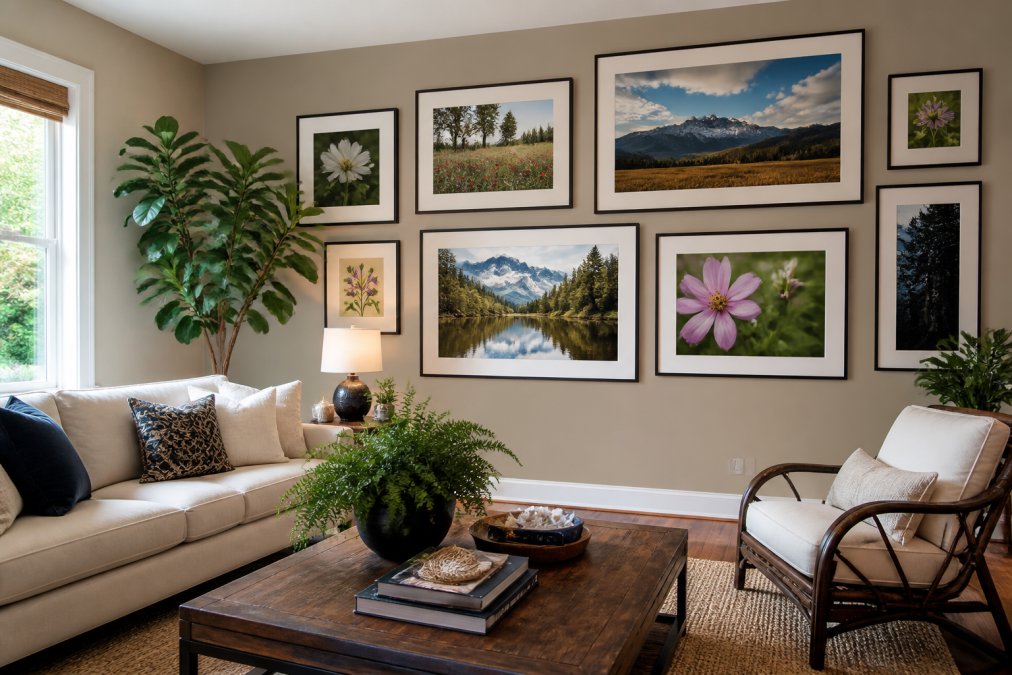
Prioritize sellers that specialize in nature-inspired subjects. Specialization signals curatorial intent and expertise in composition, subject selection, and material choices specific to nature work.
Landscape Paintings: Mountain and Meadow Scenes
Landscape paintings are the most accessible entry point for collectors. These pieces work across interior styles and don't require abstract interpretation.
Look for artists with sustained engagement with specific environments. Mountain Flowers ($895) balances botanical detail with landscape composition. Red Flowers in a Meadow ($995) uses vibrant color while maintaining visual authenticity.
Landscape paintings offer versatility, integrating into traditional, contemporary, and eclectic interiors without design constraints.
Landscape paintings offer educational value, teaching you to see light, color, and composition in your own space.
Flora and Fauna Photography: Orchids and Wildlife
Photography captures specificity, a particular orchid, a specific wildlife moment, that painting stylizes. For collectors seeking botanical precision or documentation, photography delivers what paintings cannot.
The Ghost Orchid ($55) documents one of nature's most mysterious flowers with technical precision. Quality botanical photography differs from generic prints through the artist's knowledge of species, growing conditions, and ecological significance.
Wildlife photography like WoodPecker Sunday ($95) and Eagle in Flight ($95) appeals to collectors interested in natural cycles and animal behavior. Assess whether the artist demonstrates genuine interest in animal behavior or merely captures striking moments.

Photography prints start at $55, making them accessible entry points. You can experiment with framing and placement without significant commitment, and build thematic collections.
| Art Type | Starting Price | Best For | Curation Focus |
|---|---|---|---|
| Original Landscape Paintings | $895-$1,295 | Focal wall pieces, serious collectors | Artist's sustained engagement with specific environments |
| Flora Photography | $55-$95 | Bedrooms, offices, gallery walls | Botanical knowledge and species specificity |
| Fauna Photography | $55-$95 | Living spaces, nature enthusiasts | Animal behavior understanding and ecological context |
| Floral Paintings | $995-$1,295 | Romantic spaces, garden lovers | Botanical accuracy combined with artistic interpretation |
Prioritize platforms and artists that specialize in nature work. Specialized galleries show curatorial judgment about authentic nature-inspired art.
Commission Structure and Pricing: Marketplace vs. Direct Artist Sales
Commission structures explain pricing variations and impact your budget. For nature-inspired collectors, pricing transparency also intersects with environmental impact.
Financial Commission Models
Marketplace platforms take 20-40% commission, built into prices. A $1,500 painting might net the artist $900-$1,200. You pay extra for platform discovery and infrastructure.
Direct artist sales eliminate middleman layers. Just Art by John's pricing reflects artist compensation without markup. You either pay less or the artist receives fair compensation.
The trade-off is visibility. Marketplaces invest in discoverability; direct galleries rely on intentional seeking. For serious collectors, direct purchase avoids paying for unwanted algorithmic visibility.
Direct sales lack marketplace reviews, but this is solvable through artist research, detailed descriptions, clear return policies, and communication. Just Art by John's descriptions provide context reviews attempt to offer.
Shipping and Sustainability: The Hidden Cost of Art Acquisition
Nature-inspired art buyers often share environmental values. Shipping logistics, packaging materials and carbon footprint, represent a meaningful aspect of art purchasing.
Inquire about shipping practices: recyclable packaging, carbon-neutral options, reusable crates. These details matter for collectors whose aesthetic reflects environmental values.
Marketplaces use standardized shipping optimized for cost and speed, limiting your influence on packaging. Commission structures reduce incentive for sustainable logistics.
Photography prints ($55+) have lower environmental footprint than paintings, shipping in lightweight envelopes. Prioritizing photography initially reduces carbon footprint while building your collection.
Transparency and Artist Compensation
Evaluate seller transparency about where your money goes.
Marketplaces obscure artist compensation. You know the sale price but not the artist's take-home, making it difficult to assess fair compensation.
For collectors viewing art purchasing as economic support for artists, direct sales align values with spending. You know the artist receives the full price and can discuss their practice and development.
Budget-friendly collecting with integrity requires intention. A single $895 landscape painting from a verified artist creates more impact than five $180 generic prints. Quality and intentionality matter more than quantity.
Building Your Art Collection: Budget-Friendly Entry Points
Strategic entry points make collecting accessible regardless of budget.
Photography prints at $55 allow experimentation with how botanical imagery affects your space. You discover what colors resonate with your lighting and which subjects appeal to you.
Gallery-wrapped canvases like Mountain Flowers ($895) provide significant visual statements. A single landscape painting anchors a room and justifies the investment.
Original paintings ($995-$1,295) represent serious collecting, one-of-a-kind works with individual character that build toward cohesive collections.
Building a nature-inspired collection means moving beyond mass-market alternatives toward genuine artistic vision. Just Art by John offers original paintings from $895 and photography from $55, with curated nature-inspired focus. Direct artist relationships eliminate commission markups and ensure you support artists rather than algorithms.
Frequently Asked Questions
What makes nature-inspired art alternatives to Saatchi Art worth considering?
Nature-inspired art alternatives offer direct access to emerging artists, transparent commission structures, and curated collections focused specifically on landscape, flora, and fauna themes. Many collectors prefer alternatives because they provide original paintings and fine art prints at varying price points, from affordable photography at $55 to premium original paintings. Direct-to-artist platforms also eliminate marketplace commissions, meaning more of your purchase supports the creator.
How do I verify art quality online before buying original paintings or prints?
Request high-resolution images showing brushwork detail and color accuracy. Check if the artist provides information about materials, dimensions, and artistic background. Read customer reviews and look for return policies. Compare product descriptions carefully, original paintings should specify medium and canvas type, while fine art prints should note the printing method. Ask the artist direct questions about how pieces photograph in different lighting, and verify their credentials or exhibition history when available.
What's the price difference between buying from a marketplace versus directly from an artist?
Marketplaces typically take 20-50% commission, which increases final prices. Buying directly from an artist eliminates these middleman fees, so you pay closer to the artist's actual asking price. For example, original paintings range from $895 to $1,295 when purchased directly, while fine art photographs start at $55. Direct purchases also give you transparency about where your money goes and often include personalized communication with the creator about your specific piece.
Are original paintings worth more than fine art prints for a nature-inspired collection?
Original paintings and fine art prints serve different purposes. Original paintings are one-of-a-kind works that appreciate as investment pieces and command higher prices ($895-$1,295). Fine art prints, including Giclèe reproductions, offer the same artistic aesthetic at lower entry points ($55-$95) and are ideal for collectors starting their first collection or decorating multiple rooms. Both formats showcase nature themes like landscapes, orchids, and wildlife with equal visual impact.