


Table of Contents
- Understanding Your Online Art Return Policy
- Step 1: Verify Return Eligibility Before You Act
- Step 2: Contact Customer Service and Request a Return
- Step 3: How to Package Art for Return Safely
- Step 4: Handle Return Shipping for Artwork
- Handling Damaged, Misrepresented, or Incorrect Artwork
- Tracking Your Refund and Understanding Timelines
- Frequently Asked Questions
Last Updated: October 5, 2026
Understanding Your Online Art Return Policy
Every online art retailer has its own policy for how to return art purchased online, some accept returns within 30 days, others have stricter windows or exclude certain artwork types.
Find the return policy on the seller's website, usually a footer link or "Returns" page, and note the window, condition, and packaging requirements.
Check these key details in any online art return policy:
- Return window (days from purchase or delivery)
- Whether unopened/unframed artwork is required
- Condition requirements (unused, undamaged, etc.)
- Restocking fees or return shipping costs
- Refund method (original payment, store credit, etc.)
Some sellers treat originals and prints differently: originals may have stricter policies or no returns, while prints often have more flexible windows.
Step 1: Verify Return Eligibility Before You Act
Your artwork must meet specific eligibility criteria before the seller will accept a return.
Check these eligibility factors:
Purchase date and return window. Count days from when you received the artwork, not when you ordered it. Mark your delivery date on your calendar.
Item condition. Most sellers require original condition: no damage, fading, or signs of display.
Original packaging. Keep the packaging the artwork came in, many sellers require returns in original boxes and wrapping.
Proof of purchase. Gather an order confirmation email, receipt, or order number before contacting support.
Artwork type restrictions. Custom orders, personalized pieces, or made-to-order artwork typically cannot be returned.
If your artwork doesn't meet these criteria, a return may not be possible.
Step 2: Contact Customer Service and Request a Return
Once eligibility is confirmed, contact customer service before you return art purchased online. Don't ship the artwork back without permission, most sellers require a return authorization first.
Find the contact method on the seller's website. Look for:
- Email address for returns or customer service
- Contact form on the website
- Phone number for customer support
- Live chat option
Email is safest because you'll have a written record. Include:
- Your order number
- The artwork title or product name
- Your purchase date
- The reason for the return (changed mind, doesn't match photos, damaged, etc.)
- Your preferred refund method
Using an Art Return Request Email Template
Use this template to structure your return request:
Subject: Return Request for Order [Your Order Number]
Dear [Seller Name] Customer Service,
I would like to request a return for the artwork from my order [Order Number], purchased on [Purchase Date]. The piece is [Artwork Title].
[State your reason: I've decided it doesn't work with my space / The colors don't match the online photos / The artwork arrived damaged / etc.]
The artwork is in [original condition / unopened / unused], and I have the original packaging. I'm requesting a [refund to original payment method / store credit / exchange].
Please let me know the next steps for returning this artwork.
Thank you, [Your Name] [Order Number] [Email Address]
Customize this template and be honest about the condition and reason. Customer service will respond with return instructions, a return authorization number, or a shipping label.
Step 3: How to Package Art for Return Safely
Follow these packing steps:
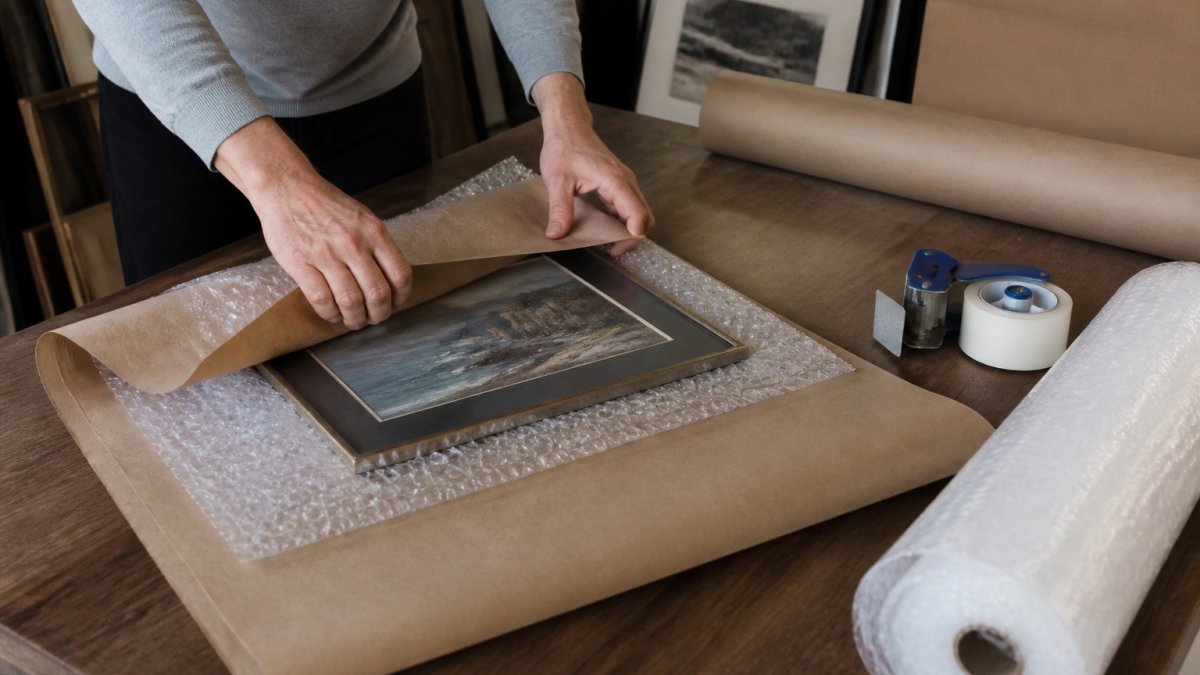
Protect the surface. Wrap the artwork in acid-free tissue paper to prevent scratches. Don't use newspaper or plastic wrap, which can damage fine art.
Add cushioning layers. Wrap at least two layers of bubble wrap around the tissue-wrapped artwork.
Reinforce the frame. If returning a framed artwork, add cardboard corner protectors.
Use a sturdy box. Choose a box slightly larger than the artwork.
Seal securely. Use strong packing tape on all seams and reinforce corners with extra tape.
Label clearly. Write "FRAGILE" and "ARTWORK" on the box. Include arrows pointing up.
Take photos. Photograph the packed artwork before sealing the box in case a dispute arises.
Step 4: Handle Return Shipping for Artwork
Shipping artwork back requires a method with tracking and insurance.
Select a tracked shipping option. Use USPS Priority Mail Express, UPS, or FedEx for tracking numbers.
Purchase shipping insurance. Declare the artwork's value on your label.
Get a shipping label. Some sellers provide prepaid return shipping labels.
Understand return shipping costs. Check your policy to see who pays.
Track the shipment. Monitor progress online, and screenshot the delivery confirmation once delivered, it proves you completed your return obligation.
Handling Damaged, Misrepresented, or Incorrect Artwork
These aren't ordinary change-of-mind returns, and treating them that way can cost you the claim. Each has its own evidence requirements and timelines. Document first, then contact the seller.
Damaged in Transit
When artwork arrives damaged, the carrier is usually responsible, but your contract is with the seller, so file with them first; they pursue the carrier.
What to document, in this order:
- Photograph the box before opening. Capture all sides, any crush marks, punctures, water stains, or tape that looks resealed.
- Photograph the packing materials. The seller and carrier will want to see whether the artwork was adequately cushioned.
- Photograph the damage itself. Multiple angles, plus a close-up of any frame corner, glass crack, canvas dent, or paint loss.
- Keep everything. Do not discard the box, packing materials, or the damaged artwork until the claim is resolved. Carriers may request an inspection, and some policies require the item be retained for a set period.
- Notify promptly. Most carriers impose short claim windows on the shipper, so the seller needs your photos fast. Contact the seller within 24-48 hours of delivery.
Misrepresented Artwork
Misrepresentation means the piece differs materially from the listing in a way that wasn't disclosed.
What counts as evidence:
- Side-by-side photos of the listing image and the artwork under neutral lighting.
- A tape measure in frame showing actual dimensions against the stated dimensions.
- Screenshots of the listing text, including any condition notes or disclaimers.
- The original product page URL and date accessed.
Color is the hardest claim to win because monitors vary. A seller can reasonably argue that a slight shift is expected. A material difference, a print described as "vibrant red" arriving as muted orange, or a listed 24x36 arriving at 18x24, is a much stronger claim.
Incorrect or Wrong Item
If you received a different artwork than you ordered, this is a straightforward seller error. The seller should cover return shipping and send the correct piece or refund you in full. Provide your order number and a photo of what arrived. Do not accept a partial refund for a wrong-item shipment unless you're satisfied keeping the piece.
Quality Defects
Poor print quality, a warped canvas, a defective frame hinge, or substandard materials are quality claims. These often qualify for a refund even outside the standard return window, because the issue is the seller's, not yours. Document with close-up photos and a written description of the defect. If the seller disputes it, ask for their inspection criteria in writing.
What to Send in Your First Message
A single well-organized email resolves most of these claims faster than a back-and-forth. Include:
- Order number and purchase date
- Artwork title and SKU if listed
- A one-sentence description of the problem
- 4-8 photos (box, packing, damage or discrepancy, close-up)
- The resolution you're requesting: replacement, full refund, or repair credit
- Your preferred contact method and availability
Tracking Your Refund and Understanding Timelines
Once the artwork is back in the seller's hands, the refund clock starts.
Stage 1: Transit. A tracked, insured return typically takes 3-7 business days to reach the seller, depending on carrier and distance.
Stage 2: Inspection. Sellers usually inspect within 3-10 business days. They verify the artwork matches the condition requirements in the policy, no new damage, original packaging, all included materials.
Stage 3: Refund issuance. After approval, the seller initiates the refund. How fast it lands depends on the payment method:
- Credit card: the card network generally requires the issuer to credit your account promptly after receiving the refund, but posting to your statement can take one to two billing cycles.
- Debit card: often 5-10 business days, and the funds may be held longer if the original transaction is still settling.
- PayPal or similar processors: usually 3-5 business days back to the funding source, or instant if refunded to a balance.
- Store credit or gift card: typically immediate, but read the terms, some credits expire.
Stage 4: Follow-up. If nothing posts within the seller's stated window plus a reasonable buffer, send a written status request referencing your order number, return tracking number, and delivery confirmation.
When a Refund Is Delayed or Denied
If the seller denies the refund or goes silent, you have escalating options:
- Written demand. Send a final email stating the amount owed, the policy language you relied on, and a deadline (for example, 10 business days) before you escalate.
- Payment dispute. For credit and debit card purchases, contact your card issuer to dispute the charge. Under the Fair Credit Billing Act, you generally have 60 days from the statement date on which the error appeared to notify the issuer in writing. Disputes are strongest when you have the return policy, your return authorization, tracking, and delivery confirmation.
- Processor dispute. For PayPal and similar services, use the platform's resolution center. These typically have their own filing windows, often shorter than card-network windows.
- Small claims court. For higher-value artwork, small claims is a low-cost option. Filing limits vary by state, so check your local court's threshold before filing.
Realistic total timeline. From the day you ship to the day funds post, plan on 2-6 weeks for a card refund and longer if a dispute is involved. Busy periods, holiday shipping, gallery sale events, can add a week or more to inspection.
Fair Credit Billing Act billing-error dispute rules
Frequently Asked Questions
What should I do if my art arrives damaged or different from its description?
Contact customer service immediately with photos of the damage or discrepancy. Most sellers will authorize a return or replacement without requiring you to pay return shipping for damaged items. Document the condition with clear photos showing the damage from multiple angles. Include your order number and purchase date when you report the issue. Keep all original packaging as proof of how the artwork arrived.
How long does it typically take to receive a refund after returning art?
Refund timelines vary by seller. Most process refunds within 7-14 days after receiving your returned artwork, but some may take up to 30 days. The time depends on when the seller inspects the item and verifies its condition. Your bank or credit card company may take an additional 3-5 business days to post the credit. Check your online art return policy for the specific timeline, and track your return shipment so you know when it arrives at their facility.
Who typically pays for return shipping when I return art?
This depends on the reason for the return. If the artwork arrived damaged or significantly different from its description, the seller usually covers return shipping costs. For returns due to buyer's remorse or a change of mind, you typically pay for return shipping unless the seller's policy states otherwise. Always check the specific online art return policy before initiating a return. Some sellers provide a prepaid shipping label, while others require you to arrange and pay for shipment.
What proof of purchase do I need to return art?
Keep your order confirmation email, receipt, or order number, these are your primary proof of purchase. The seller will use your order number to locate your transaction and verify the purchase date, which determines whether your return falls within the return window. If you paid by credit card, your bank statement also serves as proof. Have this information ready when you contact customer service to start your return request. Original packaging with tracking numbers strengthens your claim if there's a dispute.